Complete Guide to Pub Licensing Laws UK for Hospitality Businesses
Everything UK hospitality operators need to know about pub licensing laws - from applications and costs to compliance, penalties, and post-2024 regulatory updates.
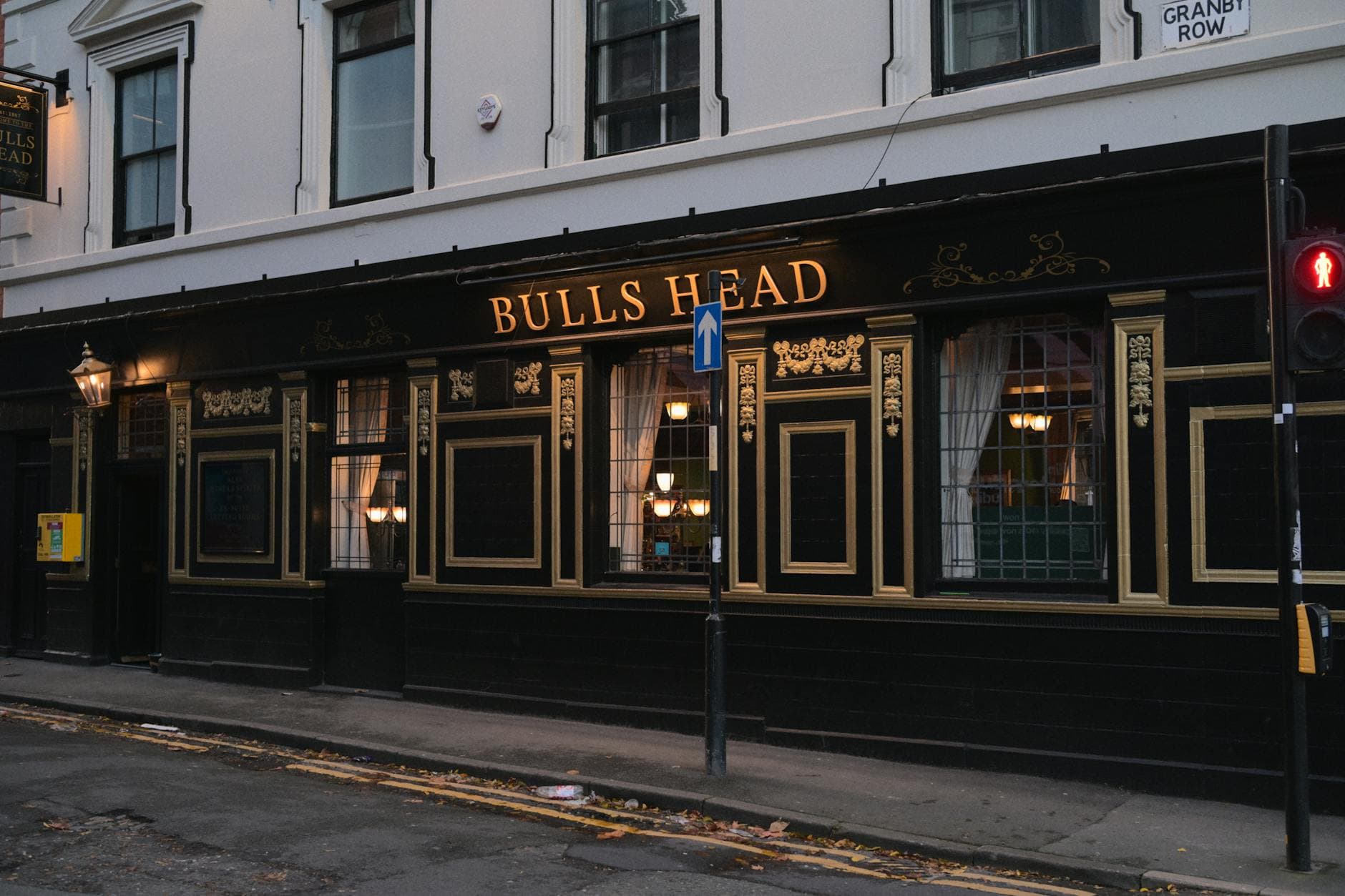 Photo: Photo by Max W on Pexels
The Licensing Act 2003: The Foundation of Pub Licensing Laws UK
If you operate or plan to open a pub, bar, restaurant, hotel, or any venue that sells alcohol in England or Wales, the Licensing Act 2003 is the piece of legislation you need to understand inside out. It replaced a patchwork of older laws and consolidated alcohol licensing, public entertainment licensing, and late-night refreshment into a single framework administered by local authorities.
The Act introduced four core licensing objectives that every licence holder must uphold:
Prevention of crime and disorder
Public safety
Prevention of public nuisance
Protection of children from harm
Everything in the licensing framework - from the conditions placed on your licence to the grounds on which it can be revoked - flows from these four objectives. Understanding them is not just a legal formality; it shapes how you run your venue on a day-to-day basis.
What Licences Does a Pub Actually Need?
One of the most common questions from new operators concerns exactly which licences are needed to run a pub. The answer involves two separate but linked authorisations:
Premises Licence - This authorises the premises itself to sell alcohol and carry out other licensable activities (such as live music or late-night refreshment). It is attached to the building, not the individual.
Personal Licence - This is held by an individual and authorises that person to authorise the sale of alcohol at any premises that holds a premises licence. At least one personal licence holder must be named as the Designated Premises Supervisor (DPS).
Depending on your activities, you may also require:
A Club Premises Certificate (if operating as a members' club rather than a commercial pub)
A Temporary Event Notice (TEN) for one-off events outside your normal licence permissions
A Pavement Licence (if you have outdoor seating on the public highway)
Music copyright licences (PPL and PRS for Music) if you play recorded or live music
To answer the question directly: yes, it is illegal to run a pub without a licence. Selling alcohol without a premises licence is a criminal offence under the Licensing Act 2003, carrying an unlimited fine and up to six months' imprisonment. There are no grey areas here.
Step-by-Step: Applying for a Premises Licence
The premises licence application process can feel daunting, but breaking it into clear steps makes it manageable. Here is how it works under pub licensing laws UK:
Identify your licensing authority - This is typically the district or borough council where your premises is located. In London, it is the relevant London borough council.
Complete the application form - Available from your local authority or via the Government's GOV.UK portal. You will need to describe every licensable activity, your proposed hours, and the steps you will take to promote the four licensing objectives.
Prepare your operating schedule - This is a written document outlining how you will manage the premises to uphold the licensing objectives. It forms the basis of your licence conditions, so invest time in making it thorough and credible.
Submit a site plan - A scaled plan of the premises showing the layout, exits, areas where alcohol will be served, and any areas used for licensable activities.
Advertise your application - You must display a blue notice at the premises and advertise in a local newspaper within 10 working days of submitting your application. The consultation period lasts 28 days.
Notify responsible authorities - You must send a copy of your application to the police, fire service, environmental health, planning, and other relevant bodies.
Attend a hearing if required - If no representations are made, your licence may be granted without a hearing. If objections are received, a licensing sub-committee will hear the case and make a decision.
Receive your licence - If granted, you will receive a licence summary that must be displayed prominently at the premises at all times.
Licence Fees and Cost Breakdown
Licence fees in England and Wales are set by central government and are based on the rateable value of the premises. Here is a summary of the current fee bands for a premises licence application:
Rateable Value Band | Application Fee | Annual Charge |
|---|---|---|
Band A: None or up to £4,300 | £100 | £70 |
Band B: £4,301 - £33,000 | £190 | £180 |
Band C: £33,001 - £87,000 | £315 | £295 |
Band D: £87,001 - £125,000 | £450 | £320 |
Band E: Over £125,000 | £635 | £350 |
Large venues (multiplier applies) | Up to £1,905 | Up to £1,050 |
A personal licence costs £37 to apply for and does not require renewal (it is valid indefinitely, provided the holder remains eligible). A Temporary Event Notice costs £21 per notice. If your application goes to a hearing, there may be additional local authority hearing fees, typically ranging from £25 to £500 depending on the council.
Budget also for solicitor fees if you engage a licensing lawyer, which can range from £500 to several thousand pounds for complex applications or contested hearings.
Personal Licence Holder Responsibilities
The Designated Premises Supervisor (DPS) is the named personal licence holder responsible for the day-to-day management of alcohol sales at a premises. Every premises that sells alcohol must have a DPS. Key responsibilities include:
Ensuring all alcohol sales are properly authorised and comply with the premises licence conditions
Overseeing Challenge 25 and age verification policies
Maintaining staff training records for alcohol service
Being contactable by authorities and responsive to compliance requests
Notifying the licensing authority of any changes to their details
Ensuring refusal registers and incident logs are maintained
To obtain a personal licence, an individual must hold an accredited licensing qualification (such as the APLH - Award for Personal Licence Holders), pass a Disclosure and Barring Service (DBS) check, and be over 18. The application is made to the local licensing authority where the applicant ordinarily resides.
Operating Hours, Trading Restrictions and the Key Rules Explained
Your premises licence specifies the exact hours during which you are permitted to sell alcohol. Trading outside those hours - even by a few minutes - is a breach of your licence conditions and can lead to enforcement action.
Two rules often confuse operators:
The 20-minute rule for alcohol refers to the drinking-up time provision under the Licensing Act 2003. When your licence permits you to sell alcohol until, say, midnight, customers may continue to consume drinks purchased before that cut-off for up to 20 minutes after last orders. Crucially, no new alcohol sales should be made during this period, and it applies to on-premises consumption only.
The 2-hour pub rule is less a formal legal provision and more a common licensing condition applied by many local authorities. In some areas, licensing authorities impose a condition that the venue must close within 2 hours of the end of permitted alcohol sales. This is most commonly found in cumulative impact policy areas where late-night venues are heavily scrutinised. Always check your specific licence conditions rather than relying on general rules.
Other key trading restrictions to be aware of include:
No alcohol sales to persons under 18 - a criminal offence for both the seller and the premises
No alcohol sales to a person who is drunk - a specific offence under the Licensing Act 2003
No irresponsible promotions - such as unlimited drinks deals or promotions that encourage excessive consumption
Mandatory free drinking water - if your licence permits the sale of alcohol for consumption on the premises, you must provide free potable water on request
Mandatory age verification policy - you must operate a documented age verification policy (Challenge 25 is widely recommended)
Licensing Objectives and Conditions
Your licence conditions are either mandatory (set by law and applying to all licensed premises) or specific (attached to your individual licence based on your operating schedule and any representations made during the application process).
Mandatory conditions for alcohol licences include:
A designated premises supervisor must be in place
Every sale of alcohol must be authorised by a DPS or personal licence holder
Age verification policy must be operated
Irresponsible promotions are prohibited
Free drinking water must be available
Smaller measures of spirits, wine, and beer must be available on request
Specific conditions are negotiated through the licensing process. Common examples include CCTV requirements, door supervisors, noise limiters, and restrictions on the type of entertainment permitted. If you want to vary your conditions - for example, to extend your hours for a seasonal period - you must apply for a variation to your premises licence.
Common Violations and Penalties
Understanding pub licensing laws UK is only half the battle - you also need to know what happens when things go wrong. Common violations include:
Selling alcohol outside permitted hours - can result in an unlimited fine and licence review
Serving alcohol to underage customers - up to £10,000 fine and 3 months imprisonment for the individual; licence review and possible revocation
Serving alcohol to a drunk person - up to £1,000 fine (fixed penalty notice) or prosecution
Operating without a DPS - unlimited fine and criminal record
Failing to display the licence summary - civil penalty
Breaching specific licence conditions - licence review, modification, suspension, or revocation
A licence review can be triggered by the police, trading standards, or any responsible authority if they believe the licensing objectives are not being upheld. The sub-committee can modify conditions, suspend the licence for up to three months, or revoke it entirely. Revocation can mean the permanent end of your business.
Real-world example: A busy city-centre bar in Birmingham had its premises licence revoked in 2023 following a series of documented incidents including violence on the premises, persistent underage sales, and failure to operate CCTV in line with licence conditions. Despite warnings, the cumulative pattern of non-compliance led to full revocation - underscoring why proactive compliance culture matters far more than reactive fixes.
Licensing Laws Across the UK: England, Wales, Scotland and Northern Ireland
A critical point that many national guides overlook: pub licensing laws in the UK are not uniform. If you operate or plan to open in Scotland or Northern Ireland, the rules are substantially different.
England and Wales operate under the Licensing Act 2003 as described throughout this guide.
Scotland operates under the Licensing (Scotland) Act 2005, administered by Licensing Boards (not local councils as licensing authorities). Key differences include:
Premises licences must be renewed every five years (not indefinite as in England/Wales)
A premises manager (equivalent to DPS) must hold a Scottish personal licence
Scotland has a minimum unit price for alcohol (currently 50p per unit) which is a key trading consideration
Occasional licences (equivalent to TENs) have different rules and restrictions
Northern Ireland operates under the Licensing (Northern Ireland) Order 1996 and subsequent amendments. Licensed premises are divided into categories (e.g., hotels, restaurants, bars), and licensing is administered through the courts rather than local councils. Permitted hours are more restrictive by default, and Sunday trading has historically been subject to tighter controls.
Always take jurisdiction-specific legal advice if you are operating outside England and Wales.
Renewing, Transferring and Varying an Existing Licence
In England and Wales, a premises licence does not expire - it is indefinite unless surrendered, suspended, or revoked. However, there are important administrative processes to manage:
Annual charge - You must pay the annual licence fee to your licensing authority on the anniversary of the licence being granted. Failure to pay is a criminal offence and results in the licence lapsing automatically.
Transfer - If you buy or take over a licensed premises, the premises licence must be transferred into your name before you begin selling alcohol. You can apply for an interim authority notice to cover the period while the transfer is processed, but this must be done within seven days of taking over the premises. Failure to transfer in time means you are trading without a valid licence.
Variation - If you want to change any aspect of your licence (hours, activities, conditions, DPS, or the area of the premises), you must apply for a variation. There are two types: a full variation (used for significant changes, involving the same 28-day consultation process) and a minor variation (for small changes that are unlikely to impact the licensing objectives, with a 10-working-day consultation period and a lower fee of around £89).
DPS change - If your DPS leaves, you must appoint a new one and notify the licensing authority. There is a two-month grace period, but operating without a DPS beyond this is a criminal offence.
Staff Training Requirements for Alcohol Service
While the Licensing Act 2003 does not mandate a specific qualification for all bar staff, staff training is a cornerstone of demonstrating your commitment to the licensing objectives - and gaps in training are frequently cited in licence reviews and enforcement actions.
Best practice for alcohol service staff training includes:
Induction training on your premises licence conditions and Challenge 25 policy before any member of staff serves alcohol
Regular refresher training (at minimum annually, or whenever conditions change)
Documented training records with signatures, dates, and content covered
Specific training on refusing service to intoxicated customers or those who are underage
Awareness of acceptable ID formats (passport, driving licence, PASS-accredited cards)
Training on your refusal register and how to complete an incident log
Many operators also encourage bar staff to work towards the Award for Responsible Alcohol Retail (ARAR) or similar qualifications. Licensing authorities view accredited training positively, and it strengthens your defence if a compliance issue is ever raised.
Post-Pandemic Licensing Updates: What Changed in 2024-2025
The COVID-19 pandemic prompted a wave of temporary licensing flexibilities, some of which have been made permanent or extended. Here is what UK hospitality operators need to know about recent changes:
Pavement Licensing - The Business and Planning Act 2020 introduced a simplified process for pavement licences (outdoor seating on the public highway). The Levelling Up and Regeneration Act 2023 made this a permanent fixture, with councils able to grant licences for up to two years and an application fee capped at £500. This is highly relevant for pubs and restaurants looking to maximise outdoor trading.
Off-sales permissions - During the pandemic, many premises were granted temporary permissions to sell alcohol for off-premises consumption (takeaway alcohol). While the blanket temporary permissions have ended, many operators successfully applied to vary their licences to retain off-sales permissions permanently. If you did not do this and wish to offer takeaway alcohol, you will need to apply for a full variation.
Cumulative Impact Assessments - The Licensing Act 2003 (as amended by the Policing and Crime Act 2017) strengthened the basis for Cumulative Impact Assessments (CIAs). In 2024-2025, more local authorities have adopted formal CIA policies in response to concerns about night-time economy saturation in city centres. If your premises is in a CIA area, you will face a rebuttable presumption against granting new licences or variations - meaning you need strong evidence that your venue will not add to existing problems.
Licensing guidance updates - The Home Office updated its statutory guidance under Section 182 of the Licensing Act 2003 in recent years. Always check you are working from the most current version of this guidance, as it informs how licensing authorities exercise their functions.
Digital Compliance Tools and Record-Keeping Requirements
One area where many pubs and bars still fall short is documentation. Licensing inspections regularly reveal missing training records, incomplete refusal registers, and out-of-date staff signing-off sheets. Digital tools are increasingly helping operators close these gaps.
Key records you must maintain under pub licensing laws UK:
A copy of the premises licence and summary (the summary must be displayed; the licence must be available for inspection)
Staff training records for all staff involved in alcohol service
A refusal register documenting refused sales (with date, time, reason, and if possible a description of the person)
An incident log recording any crime, disorder, or notable events
CCTV records (where required by licence conditions), retained for the period specified
Records of any Temporary Event Notices served
Hospitality management platforms like Paddl can help centralise compliance documentation, automate training record management, and provide audit trails that demonstrate proactive compliance to licensing authorities. When an inspection happens - and in busy licensed premises, it is a matter of when, not if - having your records in order can mean the difference between a clean bill of health and a formal warning.
Summary and Next Steps
Navigating pub licensing laws UK is not a one-off task. It requires ongoing attention to your licence conditions, staff training, record-keeping, and awareness of regulatory changes. The penalties for getting it wrong - from unlimited fines to permanent revocation - are serious enough that compliance must be embedded in your operational culture, not treated as an afterthought.
Here is a practical checklist to assess your current compliance position:
Is your premises licence current and the summary prominently displayed?
Do you have a named DPS with a valid personal licence?
Have all staff who serve alcohol received documented induction and ongoing training?
Is your refusal register up to date and accessible?
Are you operating within the hours specified on your licence?
Have you paid your annual licence fee?
If you want to change anything about your operation, have you applied for the appropriate variation?
Are you aware of any Cumulative Impact Assessment policies in your area?
If you are unsure about any aspect of your licensing position, consult a specialist licensing solicitor or contact your local licensing authority directly. They would rather help you get it right than deal with the consequences of serious non-compliance.
Frequently asked questions
Is it illegal to run a pub without a license?
Yes, it is a criminal offence under the Licensing Act 2003 to sell alcohol without a valid premises licence. The penalties include an unlimited fine and up to six months' imprisonment for individuals involved. Operating without a licence even briefly - for example during a change of ownership - can result in prosecution, so it is essential to transfer or apply for a licence before trading begins.
What is the 20 minute rule for alcohol?
The 20-minute rule refers to the drinking-up time provision under the Licensing Act 2003. When a premises' licence permits alcohol sales until a set time, customers who purchased their drinks before that cut-off may continue consuming them for up to 20 minutes after last orders. No new alcohol sales are permitted during this period. This provision applies only to on-premises consumption, not takeaway or off-sales.
What is the 2 hour pub rule?
The 2-hour pub rule is not a universal statutory requirement but a common licensing condition applied by some local authorities, particularly in areas covered by a Cumulative Impact Assessment policy. It typically requires a venue to cease trading and close to customers within 2 hours of the end of their permitted alcohol sales. Always check your specific premises licence conditions, as this rule is not automatically applied to all pubs.
What licenses are needed to run a pub?
At minimum, you need a premises licence (authorising the venue to sell alcohol and carry out other licensable activities) and a Designated Premises Supervisor with a personal licence. Depending on your operation, you may also need a Temporary Event Notice for one-off events, a pavement licence for outdoor seating on the public highway, and music copyright licences from PPL and PRS for Music if you play recorded or live music.