Complete Guide to Kitchen Equipment Maintenance for UK Hospitality Businesses
From fryers to fridges, master kitchen equipment maintenance with this practical UK guide covering compliance, cost savings, staff training, and digital scheduling tools.
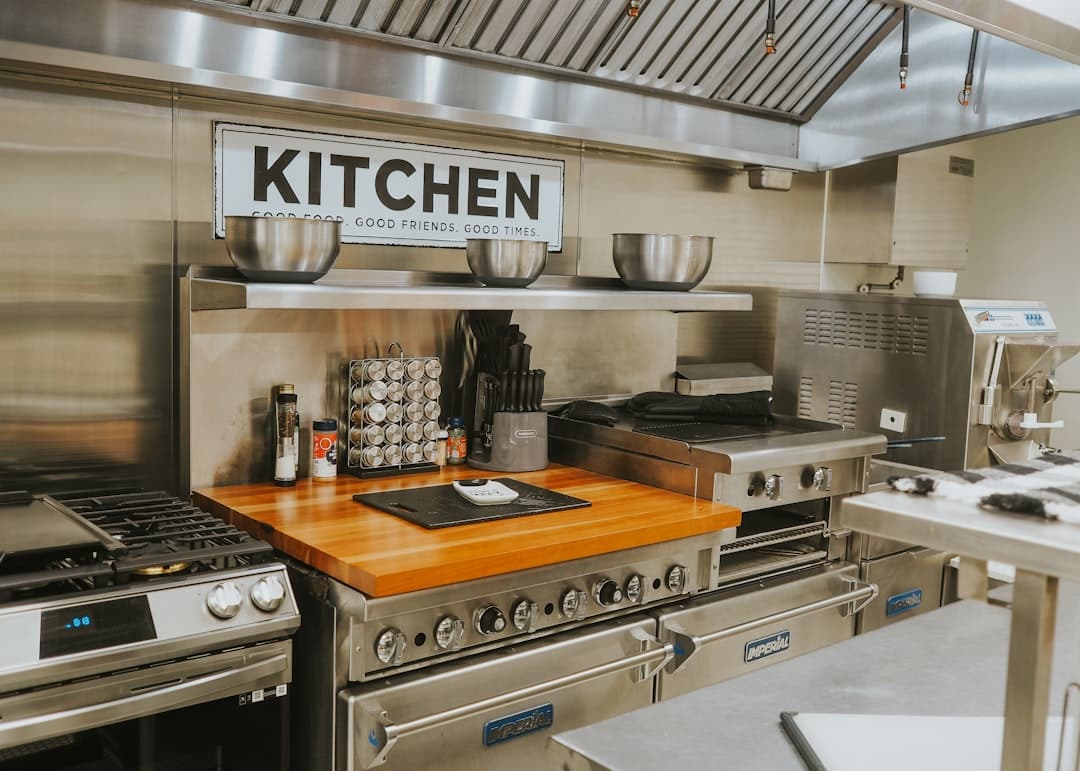 Photo: Photo by Barbara Burgess on Unsplash
What Is Kitchen Equipment Maintenance?
Kitchen equipment maintenance is the ongoing process of cleaning, inspecting, servicing, repairing, and replacing the tools and appliances that keep a commercial kitchen running safely and efficiently. It spans everything from daily wipe-downs of a grill plate to annual gas safety inspections on a combi oven - and every step in between.
For UK hospitality businesses, maintenance is not optional. The Food Safety Act 1990, the Food Hygiene Regulations 2006, and HSE guidance all require that equipment is kept in a condition that prevents contamination and protects staff. HACCP plans must account for equipment failure as a hazard point, meaning your maintenance programme is directly tied to your legal food safety obligations.
Done well, kitchen equipment maintenance reduces operating costs, extends asset lifespan, keeps your food hygiene rating intact, and protects your team from avoidable accidents.
Why Preventative Maintenance Beats Reactive Repairs
Reactive maintenance - fixing things only when they break - is the most expensive strategy available to a hospitality operator. Industry data consistently shows that planned preventative maintenance costs between 60% and 80% less per intervention than emergency callouts. When you factor in lost revenue from kitchen downtime, the gap widens further.
Consider a walk-in refrigeration unit that fails mid-service on a Saturday night. Beyond the emergency repair bill, you face potential stock loss running into hundreds of pounds, a possible food safety incident, and a disrupted service that damages customer satisfaction. A quarterly service contract costing a fraction of that emergency callout would almost certainly have caught the early warning signs.
The business case for preventative maintenance is straightforward: it converts unpredictable, budget-breaking emergencies into controlled, foreseeable costs you can plan around.
The True Cost of Equipment Downtime
When calculating the ROI of a maintenance programme, most operators only consider the repair bill. The real cost of downtime includes:
Lost covers and direct revenue during the period of failure
Wasted stock that can no longer be served or stored safely
Emergency engineer callout rates, which can be two to three times standard rates outside business hours
Staff overtime or idle time while the kitchen is out of action
Reputational damage from poor reviews or cancelled bookings
Potential enforcement action if a food safety officer inspects during or after the incident
Building a simple cost-benefit model - annual maintenance contract cost versus average emergency repair cost multiplied by likely failure frequency - almost always justifies the planned spend.
10 Ways to Maintain Kitchen Tools and Equipment
This is the practical core of any kitchen equipment maintenance programme. Here are ten proven methods, from daily habits to strategic decisions:
Clean daily, without exception. Grease, food debris, and moisture are the primary causes of equipment degradation. Build cleaning into every shift-end routine.
Conduct pre-shift visual checks. Train staff to inspect for unusual noises, warning lights, leaks, or performance changes before service begins.
Follow manufacturer service intervals. Every appliance comes with recommended service frequencies - treat these as a legal minimum, not a suggestion.
Schedule deep cleans. Monthly or quarterly deep-cleaning strips equipment down to components that daily cleaning misses, such as ventilation fans, burner assemblies, and condenser coils.
Keep a maintenance log. Record every inspection, fault, repair, and part replacement. This log is evidence of due diligence if you face an Environmental Health inspection.
Train staff on correct usage. Most premature equipment failures are caused by operator error - overloading, wrong settings, or improper cleaning chemicals that damage seals and surfaces.
Use digital scheduling tools. Replace paper checklists with maintenance management software that sends automatic reminders, stores records, and flags overdue tasks.
Monitor energy consumption. A sudden increase in energy use by a refrigerator or oven is often the earliest indicator of a developing fault - long before it becomes a breakdown.
Establish supplier relationships before you need them. Agree service contracts and response time SLAs with approved engineers before an emergency strikes, not during one.
Plan for replacement, not just repair. Track equipment age and failure frequency. When repair costs consistently exceed 30-40% of replacement cost, a new asset is the smarter investment.
Equipment-Specific Maintenance: Your Checklist by Appliance
Different appliances have different failure modes and service requirements. Here is a quick-reference breakdown for the most common commercial kitchen equipment:
Equipment | Daily Task | Monthly Task | Annual/Professional |
|---|---|---|---|
Commercial Oven | Clean interior, check door seals | Calibrate thermostat, clean burners | Gas safety check (Gas Safe engineer) |
Deep Fat Fryer | Filter oil, clean basket and surround | Full boil-out, inspect heating elements | Thermostat and safety cut-out test |
Refrigeration | Log temperatures, check door seals | Clean condenser coils, defrost if needed | Refrigerant levels, compressor service |
Chargrills and Grills | Scrape and degrease grill surface | Clean burners and drip trays fully | Gas injector and valve inspection |
Dishwasher | Clean filters, check chemical dosing | Descale, inspect spray arms and jets | Full mechanical service, pump check |
Extraction Canopy | Wipe filters, check airflow | Remove and degrease filters | Duct cleaning (fire safety compliance) |
How Often Should Kitchen Equipment Be Serviced?
Service frequency depends on equipment type, usage intensity, and manufacturer guidance. As a general framework for UK commercial kitchens:
Daily: Visual checks, cleaning, and temperature logging for refrigeration and cooking equipment
Weekly: Deeper cleans of extraction systems, dishwashers, and ice machines
Monthly: Refrigerant condenser cleaning, calibration checks, and deep fryer boil-outs
Quarterly: Professional servicing of high-use equipment such as combi ovens and fryers
Annually: Gas Safe inspections (legally required for all gas appliances), extraction duct cleaning, and full refrigeration servicing
High-volume sites - busy restaurant kitchens, hotel banqueting operations, or contract catering facilities - should generally double the frequency of professional servicing compared to lower-volume venues.
Staff Training and Competency Frameworks
Your maintenance programme is only as strong as the people executing it. Staff training should cover three levels of competency:
Level 1 - All kitchen staff: Daily cleaning tasks, pre-shift visual checks, fault reporting procedures, and what not to do (no unauthorised repairs or adjustments to gas or electrical appliances).
Level 2 - Senior kitchen staff and chefs: Interpreting maintenance logs, conducting weekly inspections, identifying early warning signs of failure such as unusual smells, inconsistent temperatures, or abnormal energy draw.
Level 3 - Managers and operators: Managing service contracts, overseeing compliance documentation, conducting post-repair quality assurance checks, and making lifecycle replacement decisions.
Consider formal qualifications where relevant. The Chartered Institute of Environmental Health (CIEH) offers food safety courses that reference equipment hygiene, and manufacturer-specific training is available for many major appliance brands. Document all training and keep signed records - these are valuable during Environmental Health inspections.
Digital Maintenance Scheduling and Asset Management
Paper-based maintenance logs are the norm in many UK kitchens, but they introduce real risk: logs get lost, completed tasks go unrecorded, and upcoming service dates are missed. Digital asset management systems solve all of these problems.
A good digital maintenance tool will:
Hold a complete asset register with purchase dates, warranty expiry, and service history for every piece of equipment
Send automatic reminders to the relevant team member when a task is due
Generate compliance reports for Food Standards Agency inspections or insurance reviews
Flag equipment that is approaching the end of its warranty or expected service life
Allow staff to log faults via mobile, with photographic evidence attached
Platforms such as Paddl integrate maintenance scheduling directly with your broader operations management, meaning your kitchen maintenance records sit alongside staff rotas, compliance documentation, and food safety logs in one place.
Energy Efficiency Audits: The Overlooked Saving
With UK energy costs remaining elevated, the energy performance of your kitchen equipment directly affects your operating margins. Poorly maintained equipment uses significantly more energy - a refrigeration unit with dirty condenser coils can consume up to 30% more electricity than a well-maintained equivalent.
Build energy monitoring into your kitchen equipment maintenance programme by:
Tracking energy consumption per appliance using smart meters or sub-metering
Comparing current consumption against manufacturer benchmarks and historical baseline figures
Treating a sustained increase in energy use as a maintenance trigger, not just a utility cost
Factoring energy efficiency ratings into replacement decisions - a newer, A-rated appliance may pay for itself in energy savings within two to three years
Post-Repair Testing and Quality Assurance
One area that most maintenance guides overlook is what happens after a repair. Returning repaired equipment to service without testing is a compliance and safety risk. Your post-repair protocol should include:
Confirm the repair in writing with the engineer, including what was replaced or adjusted and any parts used.
Conduct a functional test before the appliance is used for food production - verify that temperatures reach the correct levels and that all safety cut-outs operate correctly.
For refrigeration, allow sufficient time to return to safe operating temperature before restocking with food.
Log the repair in your maintenance record, including the test results and the name of the person who signed off the equipment as fit for use.
Notify your team that the equipment is back in service and brief them on any changed operating instructions.
Equipment Lifecycle Management and Replacement Strategy
Every piece of kitchen equipment has a finite working life. Commercial ovens typically last 10-15 years, refrigeration units 8-12 years, and dishwashers 7-10 years - all subject to maintenance quality and usage intensity.
A smart lifecycle strategy means tracking each asset against three criteria:
Cumulative repair cost: When total repair spend exceeds 30-40% of the cost of a new equivalent, replacement usually delivers better long-term value.
Failure frequency: Increasing frequency of breakdowns signals the end of a reliable service life, regardless of age.
Energy performance: An older appliance running on a poor energy rating may cost more to operate annually than the finance cost of a modern replacement.
When negotiating replacement contracts with UK suppliers, get multiple quotes, check engineer response time SLAs (aim for four hours or less for critical equipment), confirm parts availability for the specific model, and ask about extended warranty options. Northern and rural operators should pay particular attention to regional engineer coverage, as response times can vary significantly outside major cities.
Compliance: HSE, HACCP, and Food Safety Regulations
Kitchen equipment maintenance is a legal requirement, not merely best practice. Key regulatory obligations for UK hospitality operators include:
Food Hygiene Regulations 2006 (England): Require that food premises, including equipment, are kept clean and in good repair to prevent contamination.
HACCP: Equipment failure must be identified as a potential hazard point. Your HACCP plan should reference maintenance controls for critical equipment such as cooking appliances and refrigeration.
Gas Safety (Installation and Use) Regulations 1998: All gas appliances must be inspected annually by a Gas Safe registered engineer. Records must be kept for a minimum of two years.
Provision and Use of Work Equipment Regulations 1998 (PUWER): Employers must ensure all work equipment is maintained in an efficient state and kept in good repair, with maintenance records available on request.
Electricity at Work Regulations 1989: Portable and fixed electrical equipment must be maintained to prevent danger. PAT testing schedules should be documented and up to date.
A well-structured kitchen equipment maintenance programme - supported by digital records, trained staff, and proactive scheduling - satisfies all of these obligations simultaneously. It transforms compliance from a reactive burden into a natural byproduct of running a well-managed kitchen.
Frequently asked questions
What is kitchen equipment maintenance?
Kitchen equipment maintenance is the systematic process of cleaning, inspecting, servicing, and repairing commercial kitchen appliances to keep them operating safely and efficiently. In the UK, it is a legal obligation under the Food Hygiene Regulations 2006 and PUWER 1998, as well as a core component of any HACCP food safety plan. It covers everything from daily cleaning to annual gas safety inspections.
How often should kitchen equipment be serviced?
Service frequency varies by appliance and usage intensity. As a minimum, all kitchen equipment should receive daily cleaning checks, with deeper professional servicing quarterly for high-use items such as fryers and combi ovens. Gas appliances must be inspected annually by a Gas Safe registered engineer under UK law. High-volume operations such as hotel kitchens or contract caterers should service equipment more frequently than this baseline.
How to maintain kitchen tools and equipment?
The most effective approach combines daily cleaning by all kitchen staff, scheduled deep cleans, regular professional servicing, and a digital maintenance log that tracks every inspection and repair. Training staff on correct equipment usage prevents the operator errors that cause most premature failures. Monitoring energy consumption per appliance is also a useful early-warning indicator of developing faults before they become breakdowns.
What are the 10 ways of maintaining tools and equipment?
The ten core methods are: clean daily without exception; conduct pre-shift visual checks; follow manufacturer service intervals; schedule periodic deep cleans; keep a detailed maintenance log; train staff on correct usage; use digital scheduling tools; monitor energy consumption for fault indicators; establish supplier relationships and service contracts in advance; and plan proactively for replacement based on repair cost and failure frequency data.