Kitchen Management: What Every Hospitality Manager Needs to Know
Master kitchen management with this practical how-to guide covering inventory, food safety, team leadership, cost control, and the tech tools transforming UK hospitality kitchens.
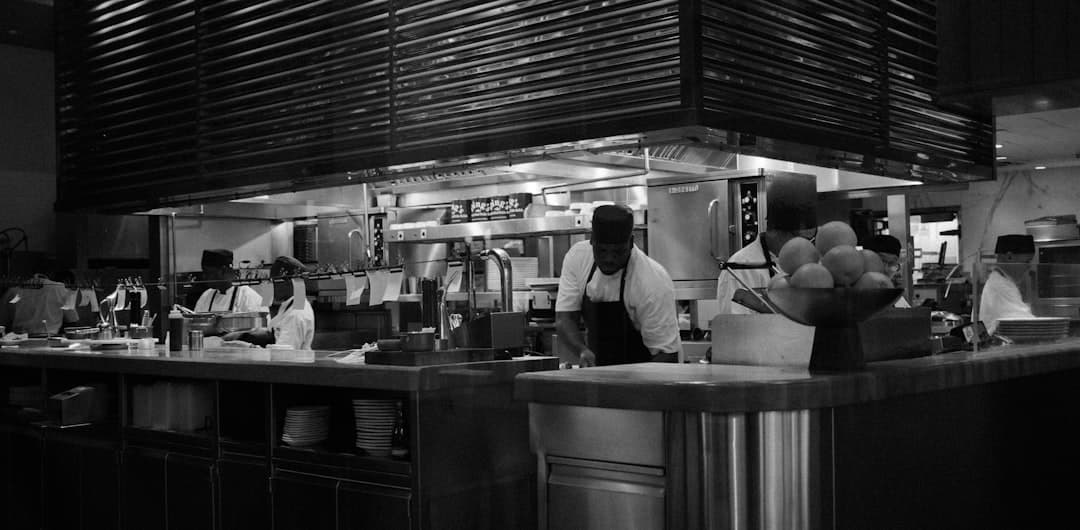 Photo: Photo by Angelina Kusznirewicz on Unsplash
What Is Kitchen Management?
Kitchen management is the day-to-day oversight of everything that happens inside a professional kitchen - from ordering ingredients and scheduling staff to maintaining food safety standards and delivering consistent dishes on time. In a UK hospitality context, it spans restaurants, pubs, hotels, cafes, and catering operations of every size.
Good kitchen management is what separates a kitchen that runs smoothly under pressure from one that falls apart during a busy Saturday service. It is not just about cooking skills. It is about systems, leadership, compliance, and continuous improvement - all working together to protect your customers, your staff, and your margins.
This guide is structured as a practical how-to, covering every major area you need to get right - including the topics that most competitor guides overlook, such as technology integration, performance metrics, crisis procedures, and supplier relationship management.
How to Set Up an Efficient Kitchen Layout
Your kitchen's physical layout directly affects speed, safety, and staff morale. A poorly designed kitchen forces chefs to cross paths, creates bottlenecks, and increases the risk of cross-contamination. Getting the layout right is one of the highest-return investments a hospitality manager can make.
Here is how to approach kitchen layout optimisation:
Map your workflow from goods-in to plate-out. Ingredients should flow in one direction - from delivery and storage, through prep, to cooking, and then to pass. Counter-flows create chaos and contamination risks.
Separate raw and ready-to-eat zones clearly. UK Food Standards Agency (FSA) guidance and HACCP principles require physical or procedural separation to prevent cross-contamination.
Position high-use equipment centrally. Fryers, grills, and ovens used constantly should be within easy reach of the stations that depend on them most.
Design for cleaning. Choose surfaces, joins, and corners that are easy to clean. Equipment should be movable or have sufficient clearance underneath to allow daily cleaning.
Review your layout regularly. As your menu evolves, your kitchen's physical setup may need to adapt. Build in an annual layout review as part of your operational planning.
How to Build and Lead a High-Performing Kitchen Team
People are the engine of any kitchen. Recruiting well, training consistently, and leading with clarity will determine whether your team holds together under pressure or unravels during a rush.
Understanding Kitchen Roles: What Is Commis 1, 2, and 3?
In traditional brigade-style kitchens, commis chefs are junior team members still learning the craft. The levels reflect experience and responsibility:
Commis 3: The most junior level. Responsibilities include basic prep tasks, mise en place, and learning kitchen procedures under close supervision.
Commis 2: A step up, with more independence on prep sections and beginning to assist with live service under guidance from senior chefs.
Commis 1: The most experienced commis grade, approaching demi chef de partie level. Capable of running a section with minimal supervision and mentoring more junior staff.
Understanding these distinctions matters for kitchen management because it helps you structure fair pay grades, assign appropriate responsibilities, and create visible progression pathways that reduce staff turnover.
Building a Staff Training and Development Programme
A structured training programme is one of the most overlooked levers in kitchen management. Here is how to build one that sticks:
Create a written induction checklist. Every new starter should go through the same onboarding process covering food safety, allergen procedures, kitchen rules, and their specific role expectations.
Use standard operating procedures (SOPs). Document how key tasks should be completed - from portioning to cleaning schedules. Make these accessible and require sign-off to confirm understanding.
Schedule regular competency reviews. Quarterly one-to-ones give you a chance to identify skill gaps, recognise progress, and plan development before problems escalate.
Invest in external qualifications. Level 2 and Level 3 Food Hygiene Awards (RSPH or Highfield) are widely recognised in the UK hospitality sector and strengthen your compliance position.
Recognise and retain your best people. High turnover is one of the biggest cost drivers in hospitality. Visible career progression, fair scheduling, and regular feedback all help reduce attrition.
What Qualifications Do You Need to Be a Kitchen Manager?
There is no single mandatory qualification to become a kitchen manager in the UK, but the most credible route combines practical experience with formal training. Most employers look for a minimum of a Level 3 Award in Food Safety in Catering (or equivalent), several years of hands-on kitchen experience at senior chef or sous chef level, and a solid understanding of HACCP principles. A degree or diploma in Culinary Arts or Hospitality Management (for example from a UK university or BTEC pathway) strengthens your candidacy for larger operations. Some kitchen managers also hold the Level 3 Award in HACCP for Food Manufacturing or a relevant apprenticeship qualification.
How to Manage Inventory and Control Food Costs
Food cost is typically the single largest controllable expense in a hospitality kitchen. Effective inventory management directly protects your margins.
Follow these steps to keep inventory under control:
Conduct weekly stock takes. Count every ingredient at the same time each week. Consistency reveals trends and flags discrepancies early.
Set par levels for every ingredient. A par level is the minimum quantity you need on hand before reordering. Calculate par levels based on usage rates and supplier lead times.
Implement FIFO (First In, First Out). Older stock should always be used before newer deliveries. Label all deliveries with receipt dates and train staff to rotate stock automatically.
Track food cost percentage. Your food cost percentage is your cost of goods sold divided by revenue, expressed as a percentage. Most UK restaurants target between 25% and 35%. Monitor it weekly, not monthly.
Negotiate with suppliers regularly. Review supplier contracts at least annually. Where possible, consolidate orders with fewer suppliers to increase your leverage and reduce delivery costs.
How to Maintain Food Safety and Legal Compliance
Food safety is not optional. Under the Food Safety Act 1990 and Regulation (EC) 852/2004 (retained in UK law post-Brexit), all food businesses must operate food safety management systems based on HACCP (Hazard Analysis and Critical Control Points) principles. Failure to comply risks prosecution, closure, and reputational damage.
The 5 Basic Kitchen Rules Every Team Must Follow
While every kitchen will have its own SOPs, these five rules form the non-negotiable foundation of safe kitchen management:
Wash hands thoroughly and frequently. Handwashing at the right times - before handling food, after handling raw meat, after using the toilet - is the single most effective way to prevent contamination.
Keep raw and ready-to-eat foods separate. Use colour-coded chopping boards and utensils, and store raw proteins below ready-to-eat foods in the fridge.
Cook food to the correct core temperature. The UK Food Standards Agency recommends cooking food until it reaches 75 degrees Celsius at the core. Use calibrated probe thermometers and log results.
Store food at the correct temperature. Fridges should be kept between 1 and 4 degrees Celsius. Hot holding must be at or above 63 degrees Celsius. Check and record temperatures at least twice daily.
Follow allergen procedures rigorously. Natasha's Law (2021) requires full ingredient labelling on prepacked-for-direct-sale foods. Staff must know how to handle and communicate allergen information accurately.
Document everything. Your HACCP records, temperature logs, cleaning schedules, and allergen management procedures should all be accessible and up to date. Environmental Health Officers (EHOs) will want to see evidence of your systems, not just hear about them.
How to Plan Menus and Manage Seasonal Demand
Menu planning is where kitchen management intersects with commercial strategy. A well-planned menu controls costs, simplifies operations, and delivers consistency.
Engineer your menu around margin, not just popularity. Menu engineering categorises dishes as stars (high profit, high popularity), ploughs (high popularity, low profit), puzzles (high profit, low popularity), and dogs (low on both). Focus investment on stars and convert ploughs through recipe tweaks.
Plan seasonal menu changes well in advance. Seasonal transitions affect ingredient availability and pricing. Give your team at least four weeks' notice of menu changes and schedule training sessions before launch.
Use demand forecasting to reduce waste. Analyse your sales data by day, daypart, and season. Most modern POS systems will surface this data automatically. Use it to adjust prep quantities and ordering accordingly.
Integrate customer feedback into menu decisions. Review feedback from online platforms, comment cards, and FOH staff regularly. Dishes consistently flagged for portion size, temperature, or quality issues need attention before they damage your reputation.
How to Reduce Waste and Improve Sustainability
Food waste is both an ethical issue and a financial one. WRAP estimates that UK hospitality and food service generates approximately 1.1 million tonnes of food waste per year. Reducing waste cuts costs, supports your sustainability credentials, and - from April 2026 - will be a legal obligation under Simpler Recycling regulations requiring separate food waste collection for businesses in England.
Practical steps to reduce kitchen waste:
Track waste daily using a waste log. Record what is thrown away, in what quantity, and why (spoilage, over-prep, customer returns). Patterns quickly emerge.
Use whole-ingredient cooking. Design dishes that use whole cuts or whole vegetables to minimise trim waste. Vegetable trimmings can become stocks; bread scraps can become croutons or breadcrumbs.
Reduce portion inconsistency. Over-portioning is a major source of hidden food cost. Use scales and portion control tools, and retrain staff when portions drift.
Consider energy efficiency alongside food waste. Upgrading to energy-efficient equipment (A-rated refrigeration, induction hobs, combi ovens) reduces utility bills and your carbon footprint. The Carbon Trust offers guidance and funding support for UK hospitality businesses.
How to Use Technology to Streamline Kitchen Operations
Technology is one of the most under-utilised tools in kitchen management, particularly among independent operators. The right software stack can save hours of admin per week and significantly improve accuracy across ordering, compliance, and scheduling.
Key technology categories to consider:
POS systems with kitchen display integration. A modern point-of-sale system connected to a Kitchen Display System (KDS) replaces printed tickets with real-time digital orders, reducing errors and improving speed. Systems like Lightspeed, Tevalis, and Epos Now are popular in the UK market.
Inventory management software. Tools such as MarketMan, Nory, or Lightspeed Inventory allow you to automate stock takes, set reorder alerts, and track food cost percentage in real time - tasks that most kitchens still do manually on spreadsheets.
Staff scheduling platforms. Rota management tools (such as Rotaready or Fourth) reduce scheduling conflicts, help you comply with Working Time Regulations 1998, and give staff visibility of their shifts further in advance.
Digital compliance and HACCP tools. Platforms like Paddl allow you to digitise temperature logs, cleaning schedules, COSHH risk assessments, and allergen records - making EHO inspections faster and your compliance position more robust.
Demand forecasting tools. Some POS and EPoS systems include sales analytics and forecasting features. Use these to predict covers by day and session, informing prep quantities and staffing levels.
How to Measure Kitchen Performance with KPIs
You cannot manage what you do not measure. Kitchen management becomes far more effective when you move from gut instinct to data-driven decisions. Here are the key performance indicators every kitchen manager should track:
KPI | What It Measures | Target Benchmark (UK) |
|---|---|---|
Food cost percentage | Ingredient cost as % of revenue | 25% - 35% |
Gross profit margin | Revenue minus cost of goods sold | 65% - 75% |
Waste as % of food cost | Value of waste vs. total food spend | Below 5% |
Ticket time | Average time from order to pass | Varies by concept - set your own baseline and improve |
Staff turnover rate | % of kitchen staff leaving per year | UK hospitality average is ~75%; aim below 50% |
EHO / Food Hygiene Rating | Official hygiene compliance score | 5 (Very Good) - the only acceptable target |
Customer complaint rate | Complaints per 100 covers | Track trend month-on-month; aim for continuous reduction |
Review these KPIs weekly in a brief kitchen management meeting. Share relevant data with your team - staff who understand the numbers are better equipped to help improve them.
How to Handle Crisis Situations in the Kitchen
Every kitchen will face a crisis at some point - a gas leak, a supplier recall, a food safety complaint, equipment failure during service, or a key member of staff calling in sick on a busy night. The difference between a minor disruption and a full-scale incident is almost always preparation.
How to prepare for kitchen crises:
Write a kitchen-specific emergency procedures document. Cover fire evacuation, gas leak protocol, flood procedure, and serious injury response. Display key information visibly and ensure all staff are briefed at induction.
Create a supplier recall response plan. Know exactly what to do if a supplier or the FSA issues a recall on an ingredient you use. Have a process to identify affected stock, remove it immediately, and communicate with customers if necessary.
Maintain a list of backup suppliers. Single-supplier dependency is a risk. For your most critical ingredients, identify at least one alternative supplier you could call on within 24 hours.
Have a condensed menu ready for understaffed services. A pre-agreed reduced menu that can be executed by a smaller team prevents quality failures when staffing drops unexpectedly.
Conduct a post-crisis debrief. After every significant incident, hold a brief debrief to identify what went wrong, what worked well, and what needs to change. Document the outcome and update your procedures accordingly.
Bringing It All Together
Effective kitchen management is not a single skill - it is a system of interlocking practices that, when working together, produce consistent food, a safe environment, a motivated team, and a profitable operation. The best kitchen managers are part leader, part analyst, part compliance officer, and part coach.
Start by auditing where you currently stand against each section of this guide. Identify your two or three biggest gaps and address those first. Then build from there - introducing technology tools, formalising training programmes, and embedding KPI reviews into your regular routine.
The hospitality sector is demanding, but a well-managed kitchen is one of the most resilient business assets you can build. Invest the time and structure to get it right, and it will pay dividends every service.
Frequently asked questions
What is kitchen management?
Kitchen management is the oversight of all operations within a professional kitchen, including staff scheduling, food safety compliance, inventory control, menu planning, and cost management. It combines leadership, systems thinking, and regulatory knowledge to ensure food is produced consistently, safely, and profitably. In UK hospitality, it is governed by frameworks including HACCP, the Food Safety Act 1990, and FSA guidance.
What are the 5 basic kitchen rules?
The five fundamental kitchen rules are: wash hands thoroughly and frequently; keep raw and ready-to-eat foods strictly separated using colour-coded equipment; cook food to the correct core temperature (75 degrees Celsius as per FSA guidance); store food at safe temperatures (fridges between 1-4 degrees Celsius, hot holding above 63 degrees Celsius); and follow allergen procedures rigorously, including compliance with Natasha's Law for prepacked-for-direct-sale foods.
What qualifications do you need to be a kitchen manager?
There is no single mandatory qualification, but most UK employers expect a Level 3 Award in Food Safety in Catering, a solid understanding of HACCP, and several years of senior kitchen experience. A degree or diploma in Culinary Arts or Hospitality Management is advantageous for larger operations. Some kitchen managers also hold apprenticeship qualifications or the Level 3 Award in HACCP for Food Manufacturing.
What is commis 1, 2, and 3?
Commis chefs are junior brigade members at the start of their culinary careers. Commis 3 is the most junior grade, focused on basic prep under close supervision. Commis 2 has greater independence and begins assisting during live service. Commis 1 is the most senior commis level, capable of running sections with minimal oversight and approaching demi chef de partie responsibilities. These grades help structure fair pay and clear career progression pathways.