Protecting Your Restaurant's Reputation: The Legal Way to Encourage Customer Reviews
Learn how to build authentic reviews, stay CMA-compliant, respond to feedback, and protect your hospitality business's online reputation across Google, TripAdvisor, and delivery platforms.
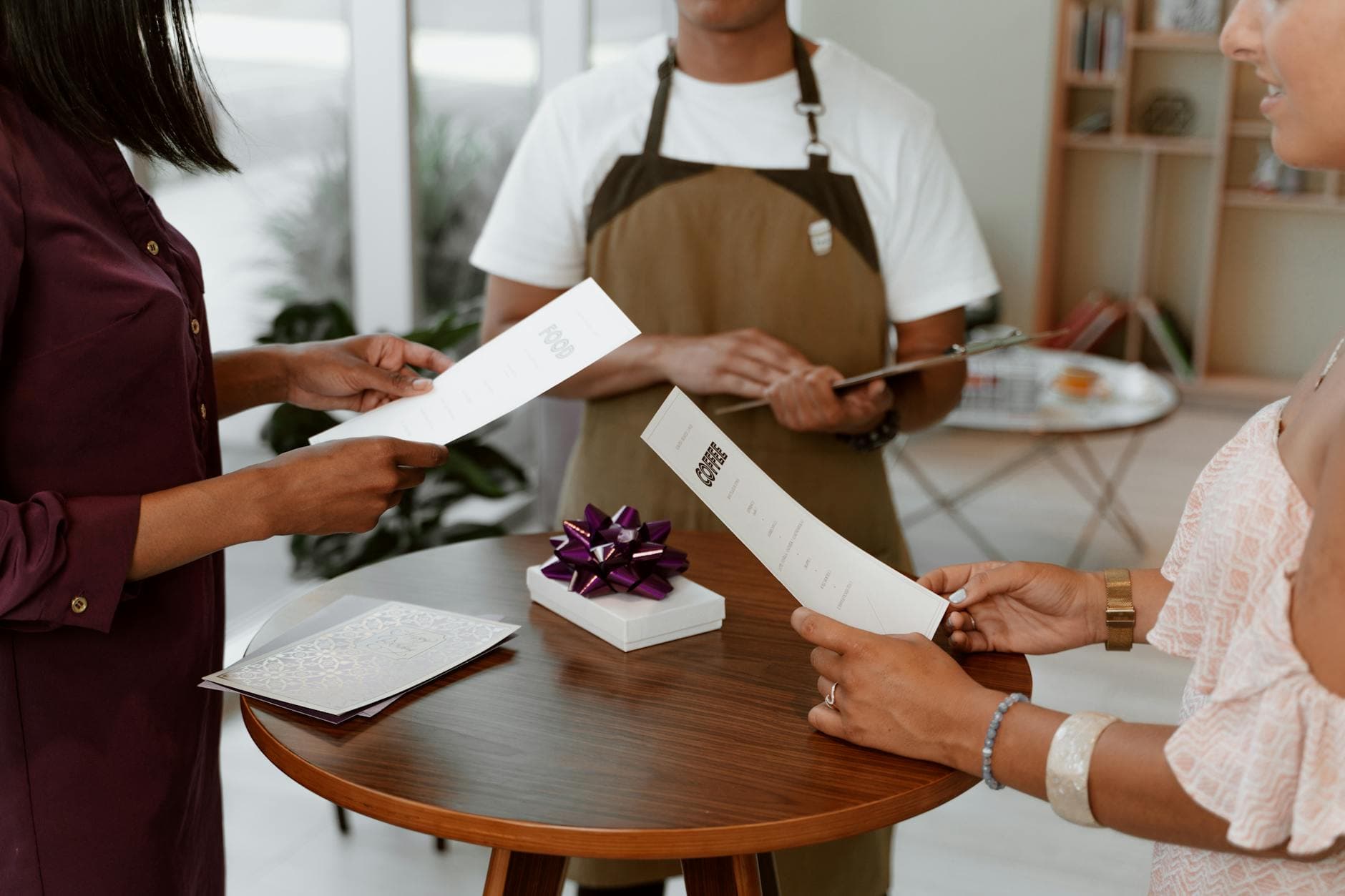 Photo: Photo by RDNE Stock project on Pexels
Online reviews are no longer a nice-to-have for UK hospitality businesses - they are a core commercial asset. Research consistently shows that the majority of diners consult Google or TripAdvisor before booking a restaurant, and a one-star improvement on a major platform can translate into a measurable uplift in revenue. Yet many operators still take a haphazard approach to reviews, and some inadvertently cross legal lines in the process.
This guide sets out exactly how to encourage customer reviews legally, stay on the right side of UK consumer law and platform policies, train your team effectively, and manage your reputation across every channel that matters to hospitality businesses.
Why Reviews Are a Business-Critical Asset in UK Hospitality
Before diving into tactics, it is worth understanding the commercial stakes. According to the Competition and Markets Authority (CMA), around 90% of UK consumers use online reviews when making purchasing decisions. For hospitality businesses - where the product is experiential and largely intangible before purchase - this figure is even higher.
Consider what reviews influence directly:
Search ranking - Google's local algorithm weighs review volume and recency when deciding which restaurants appear in the Map Pack
Booking conversions - platforms like OpenTable and Resy surface better-reviewed venues more prominently
Delivery platform positioning - Just Eat, Uber Eats, and Deliveroo use ratings to rank results and award badges
Word-of-mouth amplification - a well-crafted positive review functions as free marketing copy
Staff recruitment - hospitality workers increasingly check employer reviews on Google and Glassdoor before applying
The ROI of a strong review strategy is therefore not confined to one channel. It compounds across search, discovery, conversion, and retention simultaneously.
The Legal Landscape: CMA Rules, Consumer Law, and Platform Policies
The UK's review landscape is governed by a patchwork of legislation and platform rules. Getting this wrong is not merely an ethical failing - it carries real commercial and legal risk.
The key frameworks are:
The Consumer Protection from Unfair Trading Regulations 2008 (CPRs) - prohibit misleading commercial practices, including commissioning fake reviews or suppressing negative ones
The CMA's enforcement powers - the CMA has issued significant fines and undertakings against businesses operating fake review schemes, with powers strengthened by the Digital Markets, Competition and Consumers Act 2024
ASA guidelines on endorsements - if a review is incentivised in any way, UK advertising rules require this to be clearly disclosed
Platform-specific terms of service - Google, TripAdvisor, Booking.com, and delivery apps all prohibit incentivised reviews and can remove listings or suspend accounts for violations
The Digital Markets, Competition and Consumers Act 2024 is particularly significant. It explicitly makes commissioning fake reviews, and offering or advertising services to do so, a criminal offence. This is a marked escalation from previous civil enforcement powers.
Is It Illegal to Incentivise Reviews in the UK?
This is one of the most searched questions on this topic, and the answer requires some nuance. Incentivising reviews is not automatically illegal - but it becomes illegal when:
The incentive is conditional on the review being positive (e.g. "leave us 5 stars and get a free dessert")
The incentive is not disclosed to readers of the review
The review is fabricated entirely - written by a staff member, agency, or bot rather than a genuine customer
Negative reviews are being selectively suppressed or removed by threatening reviewers
Separately, most major platforms - including Google and TripAdvisor - prohibit incentivised reviews in their terms of service regardless of disclosure, which means even a technically legal incentive could result in your listing being removed or penalised.
The practical upshot: the safest and most sustainable strategy is to focus on earning genuine reviews through excellent service and smart, non-incentivised prompting.
How to Encourage Genuine Customer Reviews (Without Breaking the Law)
Authentic review practices for restaurants are less about clever tactics and more about removing friction at the right moment. Here is a practical how-to approach:
Step 1: Identify the Peak Satisfaction Moment
The best time to ask for a review is immediately after a moment of peak satisfaction - not at the start of a meal, and not weeks later. Common peak moments in hospitality include:
When a customer compliments the food or service verbally to a staff member
At the bill stage, after a visibly positive meal
Immediately after a delivery order is marked as completed (for delivery platforms)
At hotel checkout, after a guest has expressed satisfaction
After a successful event or private dining booking
Step 2: Make It Effortless
Customers who want to leave a review often abandon the process because it takes too many steps. Remove that friction:
Create a short link or QR code that goes directly to your Google Review form - place it on receipts, table cards, and menus
Add a TripAdvisor sticker (available free from TripAdvisor) to your entrance, menu, and till area
Include a review link in your post-visit email or SMS follow-up (within 24-48 hours for best response rates)
For hotels, include a review prompt card in the checkout folder alongside the invoice
Step 3: Ask - But Ask the Right Way
Verbal requests from staff remain one of the most effective drivers of reviews. Train your team to use natural, non-pressuring language. A simple script might be: "We really appreciate your feedback - if you enjoyed your visit, we'd love it if you shared your experience on Google. It really makes a difference to us."
Avoid language that implies any reward, or that steers the customer toward a positive review. The ask should be open and genuine.
How to Professionally Ask for a Review
Many operators are unsure how to phrase review requests without sounding desperate or pushy. Here are tried-and-tested templates for different channels:
Table card or receipt insert:
"Thank you for dining with us today. If you enjoyed your experience, we'd be grateful if you took a moment to share your thoughts on Google or TripAdvisor. Your feedback helps us keep doing what we love. [QR code]"
Post-visit email:
"Hi [Name], thank you for visiting [Restaurant Name] on [date]. We hope you had a wonderful time. If you'd like to share your experience with others, we'd really appreciate a review - it only takes a minute and means the world to our team. [Review link]"
Social media caption:
"Loved seeing so many familiar faces this week. If you've visited us recently, we'd love to hear what you thought - drop us a Google review via the link in our bio."
What Are the 3 C's of Customer Satisfaction?
The 3 C's of customer satisfaction are Consistency, Communication, and Care. In a hospitality context, these principles are directly linked to your review score. Consistency means delivering the same quality of food and service on every visit - reviewers frequently cite disappointing repeat visits as the trigger for negative feedback. Communication means setting accurate expectations, from your menu descriptions to your wait time estimates. Care means making every guest feel seen and valued, from the greeting at the door to the farewell at the end of the meal. When all three are operating well, positive reviews follow naturally - without any need for manufactured incentives.
Platform-Specific Guidance for Hospitality Businesses
Online reputation management for hospitality is not one-size-fits-all. Each major platform has its own rules, audience, and best practices.
Platform | Best for | Incentivised reviews allowed? | Key tip |
|---|---|---|---|
Google Reviews | All hospitality types, local SEO | No | Prioritise volume and recency; respond to every review |
TripAdvisor | Restaurants, hotels, attractions | No | Claim your free listing; use the Review Express tool for email prompts |
Booking.com | Hotels and accommodation | No | Review requests are automated post-stay; focus on service quality and property accuracy |
Deliveroo / Just Eat / Uber Eats | Takeaway and delivery operators | No | Packaging inserts can legally invite reviews but must not offer a reward for positive ratings |
A note on delivery app review policies: platforms like Just Eat and Deliveroo have their own internal review moderation systems and can restrict or remove listings if they detect review manipulation. Including a card inside your delivery packaging that says something like "Enjoyed your order? Let us know on [platform]" is generally acceptable - but offering a discount code in exchange for a review is not.
Training Your Staff to Support Your Review Strategy
Staff training is the single most underutilised lever for growing authentic reviews in hospitality. Your front-of-house team interacts with hundreds of customers every week - and each of those interactions is an opportunity to create a review-worthy moment or a missed one.
A practical staff training programme for reviews should cover:
Why reviews matter to the business - including how review scores directly affect visibility on platforms and, therefore, the volume of customers coming through the door
How to identify a happy customer and the right moment to make a verbal ask - training staff to read the table rather than use a scripted one-size-fits-all approach
What not to say - specifically, never ask for "a good review" or "five stars", and never link a reward to the act of reviewing
How to handle a complaint before it becomes a negative review - empowering staff to resolve issues on the spot reduces the likelihood of a disgruntled customer heading straight to Google
Where to direct customers - ensure all staff know which platforms you are prioritising and can point customers to a QR code or printed link
Consider building a brief review policy into your onboarding documentation so that every new team member understands the standards from day one.
How to Respond to Reviews: Templates and Tactics
Responding to reviews is as important as gathering them. Google's own guidelines confirm that businesses that respond to reviews are seen as more trustworthy, and TripAdvisor's algorithm factors management responses into ranking calculations.
Responding to positive reviews:
Keep responses warm, specific, and brief. Reference something from the review itself to show you have actually read it. For example: "Thank you so much for this lovely review, [Name] - we're really pleased you enjoyed the lamb and that our team made your anniversary special. We hope to see you again soon!"
Responding to negative reviews:
This is where many operators go wrong. The golden rules are: respond promptly (within 24-48 hours), stay calm and professional, apologise for the experience without necessarily accepting full liability, and take the conversation offline for resolution. A template:
"Thank you for taking the time to share your feedback, [Name]. We are sorry to hear that your visit did not meet your expectations - this is not the experience we aim to provide. We would really like to understand more about what happened and make things right. Please contact us directly at [email/phone] and we will do everything we can to help."
Never respond defensively, never attack the reviewer, and never post a response that reveals personal details about the customer. Remember: your response is as much for future readers as it is for the reviewer themselves.
Handling Fake Negative Reviews and Suspected Defamation
Fake negative reviews - whether from competitors, disgruntled former staff, or bad actors - are a genuine problem in UK hospitality. Here is how to handle them:
Flag and report: Every major platform has a reporting mechanism for reviews that violate their policies. Use it - provide as much supporting evidence as possible, including the date in question if the reviewer claims to have visited but no booking record exists
Respond calmly and factually: If you have no record of the visit described, it is entirely appropriate to state this professionally in your response. For example: "We have no record of this visit on the date mentioned, and the experience described does not reflect our usual standards. We would welcome the opportunity to discuss this further."
Document everything: Keep a record of the review, your report to the platform, and any correspondence. If the review is defamatory - containing provably false statements of fact that cause reputational damage - you may have grounds for a complaint under UK defamation law
Seek legal advice if necessary: The Defamation Act 2013 provides protections for businesses. If you believe a review is a deliberate and malicious fabrication causing material harm, consult a solicitor specialising in online reputation
Integrating Reviews Into Your Hospitality Marketing Strategy
Authentic review practices for restaurants should not exist in isolation from your wider marketing activity. Your reviews are a content asset - use them:
Feature selected Google and TripAdvisor quotes on your website homepage and booking pages
Share positive reviews on Instagram and Facebook - these serve as social proof and encourage others to leave their own feedback
Include recent review highlights in your email newsletter to previous guests
Use recurring review themes as insight for menu development, service training, or décor decisions - positive mentions of specific dishes can inform your promotional focus
Respond to reviews using keywords relevant to your locality and cuisine - this supports local SEO without being manipulative
Managing Reviews Across Multiple Platforms Simultaneously
For operators running multiple venues, or businesses active on several platforms at once, keeping up with review management can be a significant time commitment. Tools such as Reputation.com, Yext, or even a simple Google Alerts setup can notify you of new reviews in real time, so nothing slips through.
Establish a weekly review audit as part of your management routine - check each active platform, respond to any outstanding reviews, and flag any that require escalation. This process should take no more than 20-30 minutes once you have a system in place.
Your Review Management Checklist
Use the following checklist to audit your current review strategy and identify gaps:
Google Business Profile is claimed, verified, and fully completed with current hours, photos, and menu link
TripAdvisor listing is claimed and up to date
QR codes linking directly to your Google Review form are placed at the till, on tables, and on receipts
Post-visit email or SMS sequence includes a review link within 48 hours
Staff have been trained on how and when to ask for reviews, and on what never to say
A weekly review audit is scheduled into the management diary
All reviews (positive and negative) receive a response within 48 hours
No incentives are being offered that are conditional on a positive rating or undisclosed to readers
Delivery platform packaging includes a review prompt with no attached reward
A process exists for reporting and documenting suspected fake or defamatory reviews
Final Thoughts
The most effective way to encourage customer reviews legally is also the most straightforward: deliver excellent, consistent hospitality, make it easy for happy customers to share their experience, and respond to every piece of feedback with professionalism. The businesses that do this well do not just accumulate more reviews - they build the kind of online reputation that becomes a genuine competitive advantage.
UK consumer law and platform policies are only becoming stricter. The Digital Markets, Competition and Consumers Act 2024 signals that regulators are taking review integrity seriously. Now is the time to ensure your strategy is built on solid ground - not just for compliance reasons, but because authentic reviews from real customers are simply more valuable than manufactured ones.
Frequently asked questions
Is it illegal to incentivise reviews in the UK?
Incentivising reviews is not automatically illegal, but it becomes unlawful when the reward is conditional on a positive rating, when the incentive is not disclosed to other consumers, or when the review is entirely fabricated. The Digital Markets, Competition and Consumers Act 2024 also makes commissioning fake reviews a criminal offence. Additionally, platforms like Google and TripAdvisor ban incentivised reviews in their terms of service regardless of disclosure, meaning your listing could be suspended even if you have technically complied with the law.
How to encourage customers to give reviews?
The most effective approach is to ask at the right moment - immediately after a positive interaction, such as when a customer compliments your food or at the end of a successful meal. Remove friction by providing a QR code that goes directly to your review form, and train staff to make a warm, natural verbal request. Follow up via email or SMS within 48 hours of a visit. Crucially, never make the ask conditional on a positive outcome - simply invite honest feedback.
What are the 3 C's of customer satisfaction?
The 3 C's of customer satisfaction are Consistency, Communication, and Care. Consistency means delivering the same quality of food and service on every visit. Communication means setting accurate expectations at every touchpoint, from menu descriptions to wait times. Care means making every guest feel genuinely valued throughout their experience. When all three are working well in a hospitality setting, positive reviews tend to follow naturally, without the need for incentives or aggressive prompting.
How to professionally say 'please review'?
The most professional approach is to frame the request as an invitation rather than a demand. A simple verbal script works well: 'We really appreciate your feedback - if you enjoyed your visit, we'd love it if you shared your experience on Google. It really makes a difference to us.' In written communications such as receipts or emails, use warm, appreciative language: 'If you'd like to share your experience, we'd be really grateful - it only takes a moment and means a great deal to the whole team.'
How do I respond to a fake negative review on Google or TripAdvisor?
First, report the review to the platform using their official flagging process, providing any evidence that the visit did not occur. Then post a calm, factual public response noting that you have no record of the visit described and inviting the reviewer to contact you directly. Document everything, including screenshots and your report reference number. If the review contains provably false statements causing material harm, consult a solicitor, as the Defamation Act 2013 may offer grounds for further action.