How to Future-Proof Your Pub: Learning from Market Winners in 2025
Discover what successful operators like Loungers are doing differently in 2025 - and how independent pub owners can adopt all-day trading, experiential concepts, and smarter revenue models to compete.
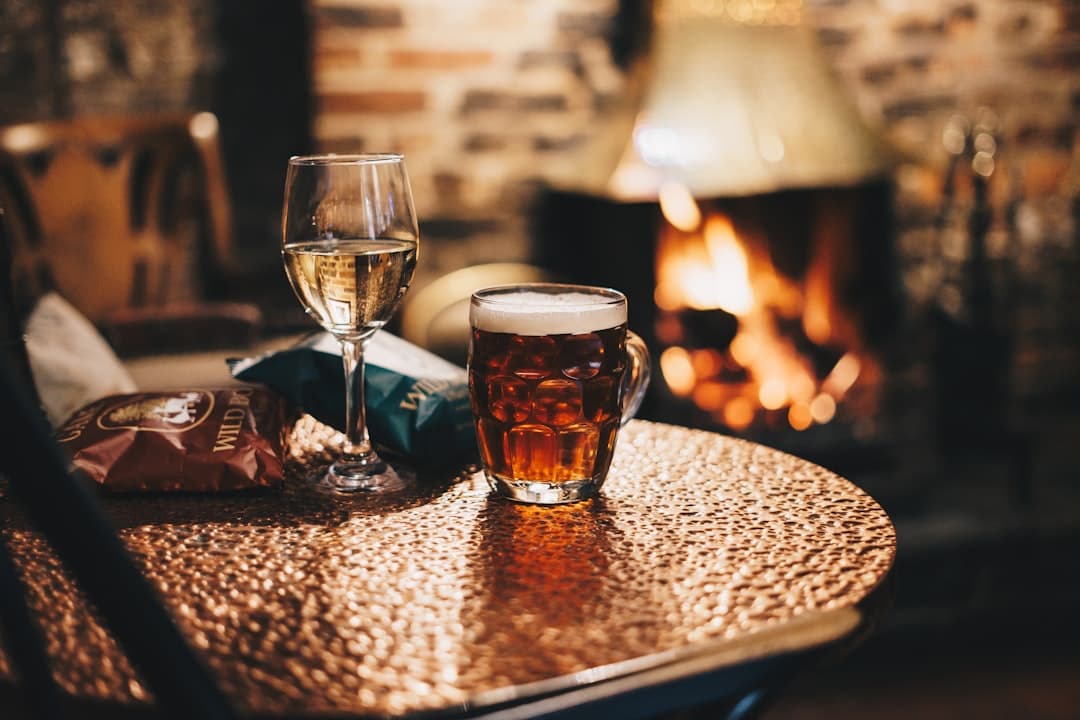 Photo: Photo by Ambitious Studio* | Rick Barrett on Unsplash
Why Some Pubs Are Thriving While Others Close
The UK pub industry paints a contradictory picture. On one hand, hundreds of pubs close every year - a trend that accelerated sharply through the pandemic and the subsequent cost-of-living squeeze. On the other hand, operators like Loungers, JD Wetherspoon (which remains controversial but undeniably resilient), and a growing crop of ambitious independents are posting strong trading figures, opening new sites, and attracting investment.
So what separates the winners from the closures? The answer is rarely luck. It is a deliberate, well-researched pub business strategy built around changing consumer habits, smarter venue design, diversified revenue, and a clear understanding of who the customer is and what they actually want in 2025.
This guide breaks down exactly what those successful operators are doing - and gives independent and smaller chain operators a practical, step-by-step framework to follow. Whether you are running a single community local or managing a small group of sites, there is a proven playbook here you can adapt.
What the Market Winners Are Doing Differently
Before diving into the how-to steps, it is worth understanding the strategic patterns behind the pubs that are genuinely thriving right now.
Loungers, which operates the Lounge and Cosy Club brands, has built one of the most consistently successful models in UK hospitality. Its formula is deceptively simple: all-day trading (opening from early morning through late evening), broad menus that work for every daypart, inclusive and comfortable interiors, and a no-bookings policy that removes friction. The result is a venue that monetises its space from 9am to 11pm rather than two dinner sessions.
Other operators - from Greene King's premium community pubs to forward-thinking independents - are following a similar logic: longer trading windows, more reasons to visit, and experiences that cannot be replicated at home or on a delivery app.
All-day trading models generate significantly more revenue per square foot than traditional wet-led pubs open from 11am to 11pm.
Experiential concepts - pub quizzes, live music, supper clubs, craft beer tastings - create reasons to visit that no supermarket or streaming service can compete with.
Food integration is now essential, even for pubs that were historically drinks-only. Kitchen revenue can account for 40-60% of turnover in successful mixed-model venues.
Community positioning - especially post-COVID - is a powerful differentiator. Pubs that became genuine community hubs during the pandemic retained the loyalty that built.
Digital investment, from modern EPoS systems to online booking and loyalty apps, is no longer optional. It directly impacts labour efficiency and customer spend.
Step 1: Audit Your Current Business Model
Before you change anything, you need an honest picture of where you stand. A proper business audit covers four areas: revenue mix, trading hours, customer profile, and cost structure.
Pull your EPoS data for the last 12 months and break down revenue by daypart (morning, lunch, afternoon, evening, late), by category (wet sales, food, accommodation, events, other), and by day of week. Most pub operators are surprised to discover how narrow their revenue window actually is - and how much dead space their venue sits empty and unproductive.
On the cost side, map your fixed costs (rent or mortgage, rates, insurance, utilities) against variable costs (food and drink cost of goods, labour) and calculate your gross margin by category. Food typically runs at 65-70% gross margin; wet sales can reach 70-75%. Understanding this split is the foundation of any sensible pricing strategy.
Step 2: Choose Your Trading Model - Wet-Led, Food-Led, or All-Day
The debate between wet-led and food-led is one of the most important strategic decisions a pub operator makes - and in 2025, a third option has emerged as the strongest performer: the all-day model.
Model | Typical Revenue Mix | Strengths | Risks |
|---|---|---|---|
Wet-led | 80-90% drinks | Lower kitchen capex, simpler ops | Highly exposed to drink-drive trends, health shifts |
Food-led | 50-70% food | Higher spend per head, family audiences | High kitchen costs, staffing complexity, food waste |
All-day | 40-60% food, 35-50% drinks, 5-15% other | Max revenue per sqft, broad audience, resilient | Operationally demanding, requires strong management |
For most independent operators, the ideal starting point is a modified food-led model with extended trading hours rather than a full Loungers-style all-day concept. Introduce a breakfast or brunch offering on weekends, extend kitchen hours by two hours in the evening, and add afternoon coffee and light bites. Measure the uplift before committing to a full refurbishment.
Step 3: Design for Multi-Use and Experiential Appeal
Multi-use venue design is not about spending a fortune on a refurbishment. It is about thinking carefully about how different areas of your pub can serve different purposes at different times of day.
A corner of your pub with good natural light and plug sockets can serve remote workers at lunchtime on weekdays - a genuinely underserved audience who spend on coffee, lunch, and afternoon drinks. That same space becomes a private dining area for a birthday party on Saturday night. A covered and heated beer garden is a revenue-generating asset year-round, not just a summer bonus. A small raised stage area opens the door to live music licensing, open mic nights, and ticketed events.
When planning any physical changes, consider your licensing position first - adding entertainment or extending hours requires a variation to your premises licence under the Licensing Act 2003. Budget for this in your planning, and engage a licensing solicitor if the variation is complex. Building beer garden infrastructure also triggers planning permission considerations in many local authorities.
Experiential dining concepts do not require a Michelin-starred chef. A well-run weekly pub quiz, a monthly guest brewer evening, a seasonal supper club, or a Sunday roast with a carving station all create experiences that drive bookings, social media content, and word-of-mouth. These are high-margin revenue streams with relatively low additional cost.
Step 4: Diversify Your Revenue Streams
Single-revenue-stream pubs are the most vulnerable operators in any downturn. The most resilient pubs in 2025 have at least three meaningful revenue lines. Here is a practical framework for building diversification without overextending:
Events and private hire: Designate a space for private bookings. Even a semi-private area of 20-30 covers generating four bookings a month at an average spend of £600 adds over £28,000 to annual revenue.
Accommodation: If your pub has upper floors or outbuildings, letting rooms is one of the highest-margin revenue streams available. Even two letting rooms at £80 per night with 60% occupancy adds roughly £35,000 annually.
Retail and off-trade: A small range of craft bottles, local spirits, or branded merchandise creates incremental revenue and marketing value simultaneously.
Subscriptions and loyalty: Monthly beer club subscriptions, loyalty card schemes tied to your EPoS, or a "locals card" with a small monthly fee in exchange for discounts create predictable recurring revenue and reduce churn.
Community space hire: Daytime hire of your function room to local groups, yoga classes, or businesses generates cash during your quietest hours.
Step 5: Invest in Digital Transformation and POS Systems
Digital transformation is one of the most consistently overlooked areas of pub management - and one of the highest-return investments available to operators who get it right.
A modern cloud-based EPoS system does far more than process payments. It tracks sales by item, by server, by time of day, and by table. It integrates with your stock management to calculate real-time gross margins and flag wastage. It connects to your booking platform, reducing no-shows through automated reminders. It feeds data into your payroll and scheduling systems, helping you match labour to actual demand rather than guesswork.
Operators who upgrade from legacy till systems to modern EPoS platforms typically report a 2-4% improvement in gross margin within the first year - simply from better portion control, reduced wastage, and improved upselling prompts. On a pub turning over £500,000 a year, that is £10,000-£20,000 in additional profit.
Online ordering and table ordering apps (QR code menus linked to a mobile ordering platform) have proven particularly effective in food-led and all-day venues, where they increase average transaction value by encouraging add-ons and reducing the friction of ordering.
Step 6: Build a Sustainable Staffing and Training Strategy
Staff retention is one of the most significant - and least glamorous - drivers of pub profitability. UK hospitality has an annual staff turnover rate estimated at 30-40%, and the cost of replacing a single team member (recruitment, training, lost productivity during the learning curve) is typically £1,500-£3,000.
The operators winning in 2025 treat their training budget as an investment, not a cost. A structured onboarding programme, regular product knowledge sessions, and a clear pathway for progression from bar staff to supervisor to assistant manager dramatically reduce turnover and improve guest experience simultaneously.
On the practical side, tip pooling policies must now comply with the Employment (Allocation of Tips) Act 2023, which requires all tips to be passed to workers in full and transparently. Make sure your tronc arrangements are documented and compliant - this is now an area of active enforcement interest.
Scheduling technology that allows staff to view rotas, swap shifts, and indicate availability via a mobile app reduces the management overhead of rota planning significantly and is particularly valued by younger hospitality workers who expect digital-first communication.
Step 7: Plan Your Outdoor Space and Community Positioning
Beer gardens and outdoor spaces have become major competitive differentiators since the pandemic. Customers who discovered al fresco dining during 2020-2021 have largely retained the preference, and a well-designed outdoor space can add 15-25% to a pub's peak-season capacity.
The key investment decisions are heating (quality overhead infrared heaters rather than cheap patio heaters), weatherproofing (a permanent or semi-permanent canopy or pergola structure), power and lighting (enabling evening use), and acoustic barriers where noise complaints are a risk. Budget carefully: a well-specified outdoor space costs £15,000-£50,000 depending on size, but typically achieves payback within two to three seasons.
Community positioning - becoming the social heart of your local area - is not just a feel-good strategy. It is a commercially sound one. Pubs that act as community hubs generate stronger word-of-mouth, attract more private hire bookings, and are significantly more resilient during economic downturns because their customers feel a genuine attachment to the venue. Post-COVID, many pubs formalized this positioning through community pub models or cooperative structures.
The Community Shares model, supported by the Plunkett Foundation, has enabled dozens of at-risk pubs to transition to community ownership - raising capital from local shareholders who are also loyal customers. If your pub faces closure or you are looking for investment partners who are genuinely aligned with the venue's success, this model is worth serious consideration.
Step 8: Get Your Finances and Cash Flow in Order
No strategy survives a cash flow crisis. One of the most common reasons good pub operators fail is not poor trading but poor financial management - specifically, insufficient cash reserves during low-season troughs, poorly structured debt, or an inability to fund capex investment from operational profit.
Build a 13-week rolling cash flow forecast and update it weekly. Know exactly when your VAT payments, lease reviews, rates reviews, and insurance renewals fall. Model the impact of a 10% drop in wet sales or a two-week kitchen closure on your ability to meet fixed costs. This is not pessimism - it is the kind of financial resilience planning that allows you to make confident investment decisions.
On the subject of leases: many pub operators are on tied tenancy agreements with pubcos, where they are required to purchase beer and other products from the pub company at above-market rates. The Pubs Code (introduced under the Small Business, Enterprise and Employment Act 2015) gives tied tenants of large pubcos the right to request a Market Rent Only (MRO) option, which allows them to become free of tie in exchange for a full market rent. If you are on a tied tenancy and have not reviewed your MRO eligibility recently, this could represent a significant cost saving.
For operators looking to fund refurbishments or expansions, the British Business Bank's recovery loan scheme, Innovate UK hospitality grants, and local authority business support funds are all worth investigating. Post-Brexit, several EU-funded regional development schemes have been replaced by the UK Shared Prosperity Fund, which has specific allocations for hospitality and tourism businesses in many regions.
Step 9: Develop a Marketing Strategy That Drives Footfall
The most beautifully designed pub with the best food and beer on the high street will still struggle if nobody knows it exists. In 2025, a pub marketing strategy needs to operate across at least three channels: social media, local SEO, and direct-to-customer communications.
Local SEO - ensuring your Google Business Profile is fully optimised, your menu is up to date on Google and food platforms, and you are generating a regular flow of genuine customer reviews - is the single highest-return marketing investment for most pubs. Most hospitality operators significantly underinvest here relative to the impact it has on footfall.
Social media for pubs works best when it is authentic and local rather than polished and corporate. Behind-the-scenes content, chef profiles, seasonal menu launches, and event announcements consistently outperform generic promotional posts. Short-form video (Instagram Reels, TikTok) generates disproportionate organic reach for relatively little production cost.
Build an email or SMS list from your bookings platform and loyalty scheme. A monthly email to 2,000 customers announcing your quiz night, new seasonal menu, or upcoming event is essentially free marketing with a measurable conversion rate. Operators who build this asset consistently report that direct communications outperform paid advertising by a significant margin for cost per booking.
Common Pitfalls to Avoid
Even the best strategies can fail in execution. Here are the most common mistakes operators make when trying to follow the market-winner playbook:
Copying the concept without the underpinning operations: Loungers works not just because of its design aesthetic, but because of its operational discipline - consistent training, tight cost controls, and strong GM culture. The look without the substance produces poor results.
Overextending before validating: Test new dayparts, menus, or events on a small scale before committing to capex. Two months of Saturday brunches tells you whether there is demand before you invest in kitchen equipment.
Neglecting sustainability credentials: Younger consumers increasingly choose venues based on environmental values. Simple steps - switching to LED, composting food waste, sourcing locally, and displaying your sustainability commitments - generate genuine goodwill and media coverage at low cost.
Ignoring food safety compliance during rapid growth: When you extend kitchen operations, your HACCP plan, allergen management procedures, and food hygiene ratings must keep pace. A poor hygiene inspection during a period of growth can undo months of marketing investment.
Underpricing: Many independent operators are reluctant to price their food and events at market rate for fear of customer pushback. In reality, customers will pay for quality and experience - and chronic underpricing simply erodes the margin you need to invest in the business.
Frequently asked questions
What is the 2 hour pub rule?
The "2 hour pub rule" is not a formal UK legal requirement, but refers to a general licensing principle that local authorities and police can apply as a condition of premises licences - particularly for late-night venues - requiring that customers do not remain on the premises for more than two hours after a certain time. In practice, it is more commonly encountered as an informal policy some pub operators apply to manage capacity and prevent anti-social behaviour rather than a statutory obligation.
Is owning a pub profitable in the UK?
Owning a pub can be profitable in the UK, but margins are thin and profitability is highly dependent on the business model, location, and management quality. The most successful pub operators diversify their revenue across food, events, and accommodation, and trade across extended hours. A well-run food-led or all-day pub in a strong location can generate a net profit margin of 8-15%. Wet-led pubs in declining footfall areas face significantly tougher conditions.
What is the most profitable pub in the UK?
No single pub is publicly confirmed as the most profitable in the UK, as private operators do not publish venue-level profit data. However, large-volume city-centre venues operated by major pubcos, as well as destination gastropubs with accommodation in affluent commuter-belt locations, typically post the highest absolute profits. On a per-square-foot basis, all-day trading venues in mixed-use urban neighbourhoods - similar to the Loungers model - consistently outperform traditional pub formats.
What is the average profit margin for a pub in the UK?
The average net profit margin for a UK pub is typically between 5% and 10% of turnover, though this varies significantly by model. Wet-led pubs often operate at the lower end (3-6%), while food-led and all-day venues can reach 10-15% with strong management. Gross margins are higher - around 65-72% across the combined wet and food mix - but fixed costs including rent, rates, and labour consume a large share of gross profit. Effective cost management and revenue diversification are the key levers for improving net margin.