Opening a brand-new site with nothing to fall back on
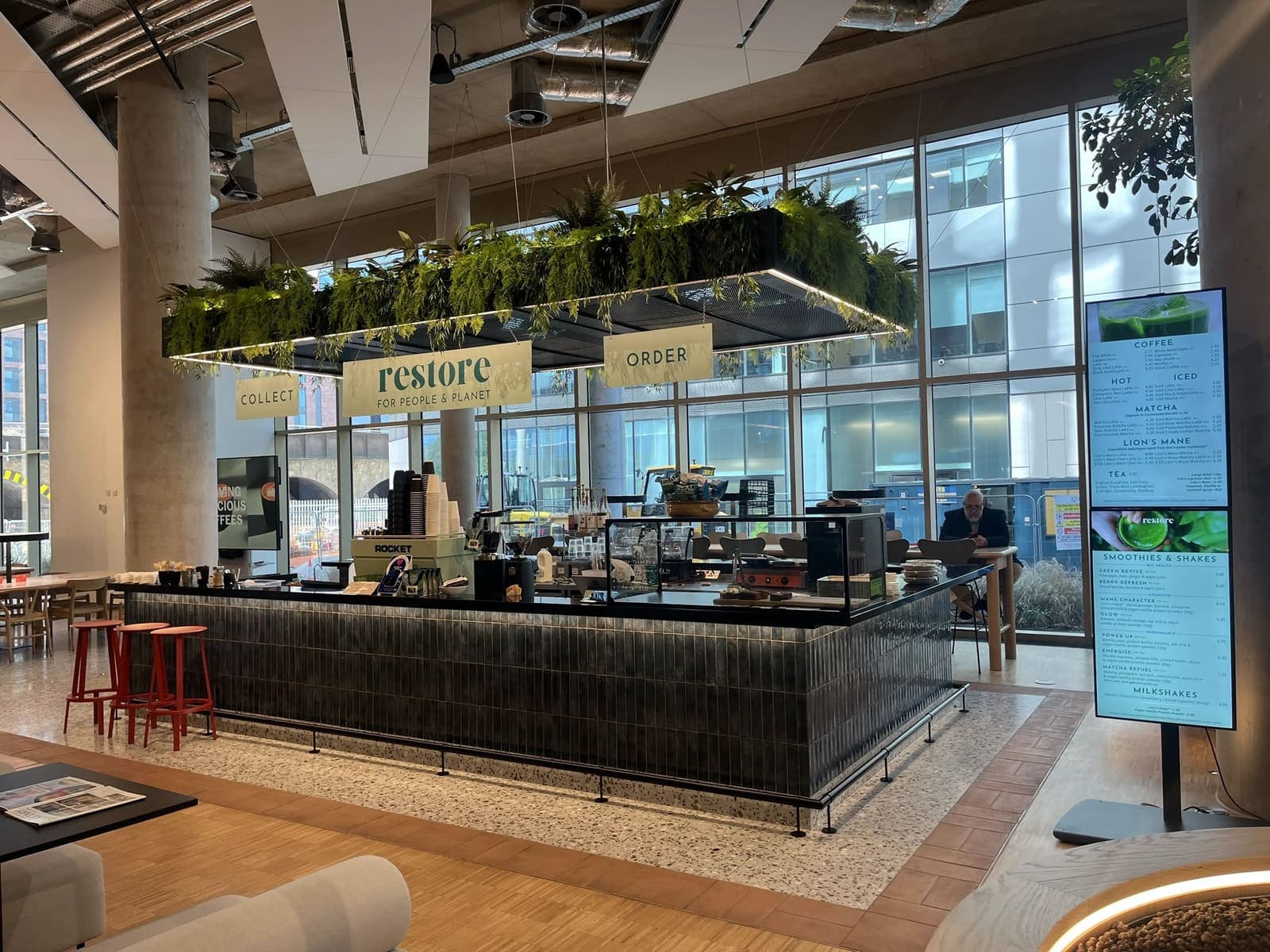
Restore opened a new concession inside the Welcome Building, a large office development in Central Bristol. Opening at a new address meant registering as a brand-new food operator there, and a new registration starts from zero in the eyes of the local authority. No track record. No history of previous inspections. Nothing to fall back on if a record could not be found.
A new site starts with no track record
An established site can lean on years of clean inspections. A new registration cannot. The first inspection sets the rating that goes on the door and onto every delivery platform, and it is the one the officer forms their first impression from.
Everything had to be on record and instantly accessible
HACCP documentation, the Safer Food Better Business pack, staff training records, risk assessments and temperature records all had to be current and produceable the moment they were asked for.
The visit is unannounced, so any shift could be the one
Nobody gets to choose which day the officer arrives or who is behind the counter when they do. Readiness that depends on a specific manager being on site is not readiness.
Keeping it current across sites is the harder problem
For a multi-site operator, the difficulty is not producing the paperwork once. It is keeping every record live at every location at the same time, without a manager driving between sites to check.
The rating was a KPI, not a nice-to-have
Food safety and hygiene compliance was a non-negotiable KPI for the Welcome Building location. Restore needed to guarantee readiness at any moment without pulling a manager off-site or disrupting service.
One place to pull everything from
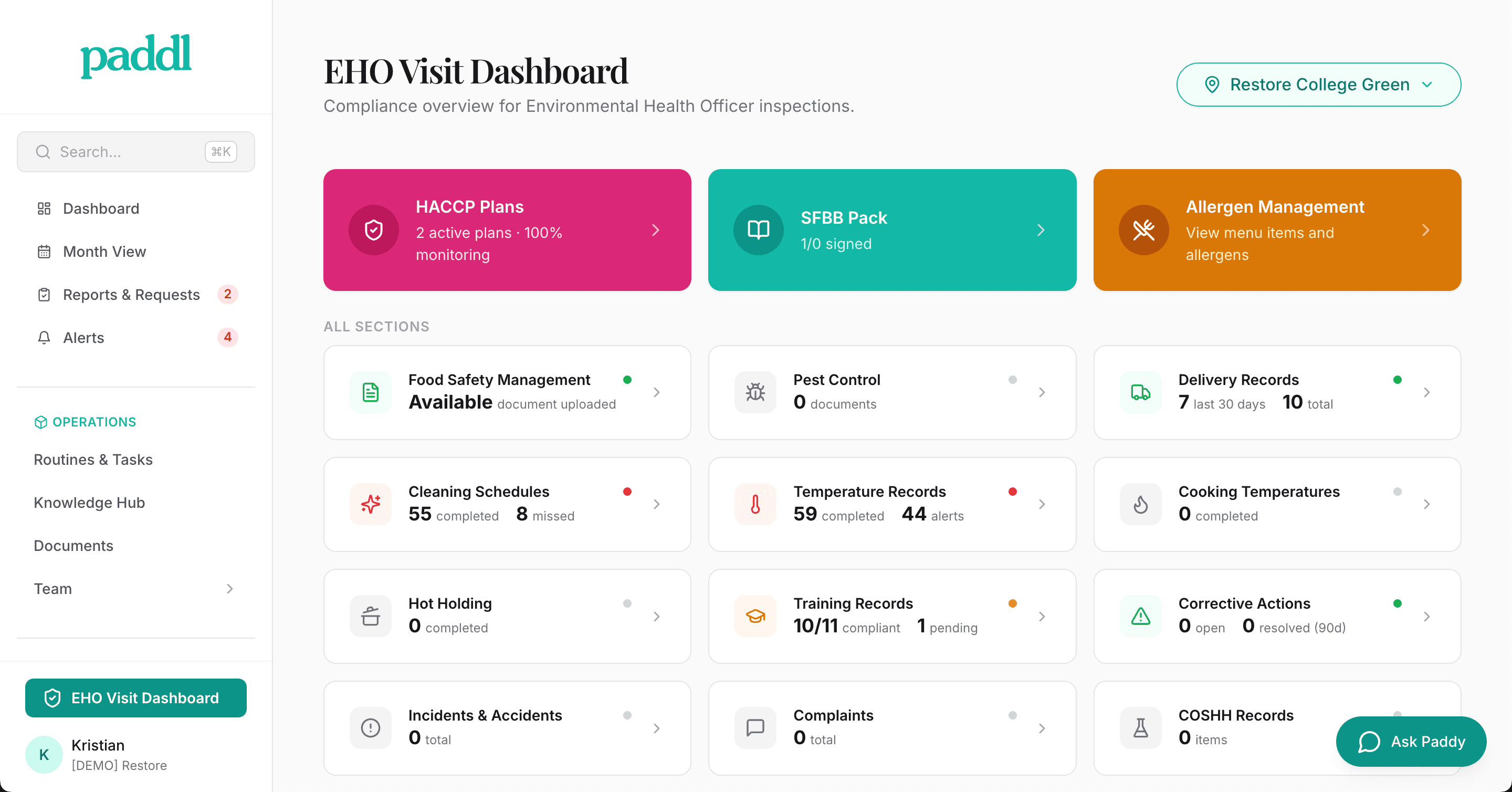
Restore used Paddl to bring every piece of compliance evidence into one centralised digital location. Instead of paperwork spread across folders, spreadsheets and sites, the EHO visit dashboard gave staff a single place to pull up whatever was needed, whenever it was needed.
One dashboard built for the visit itself
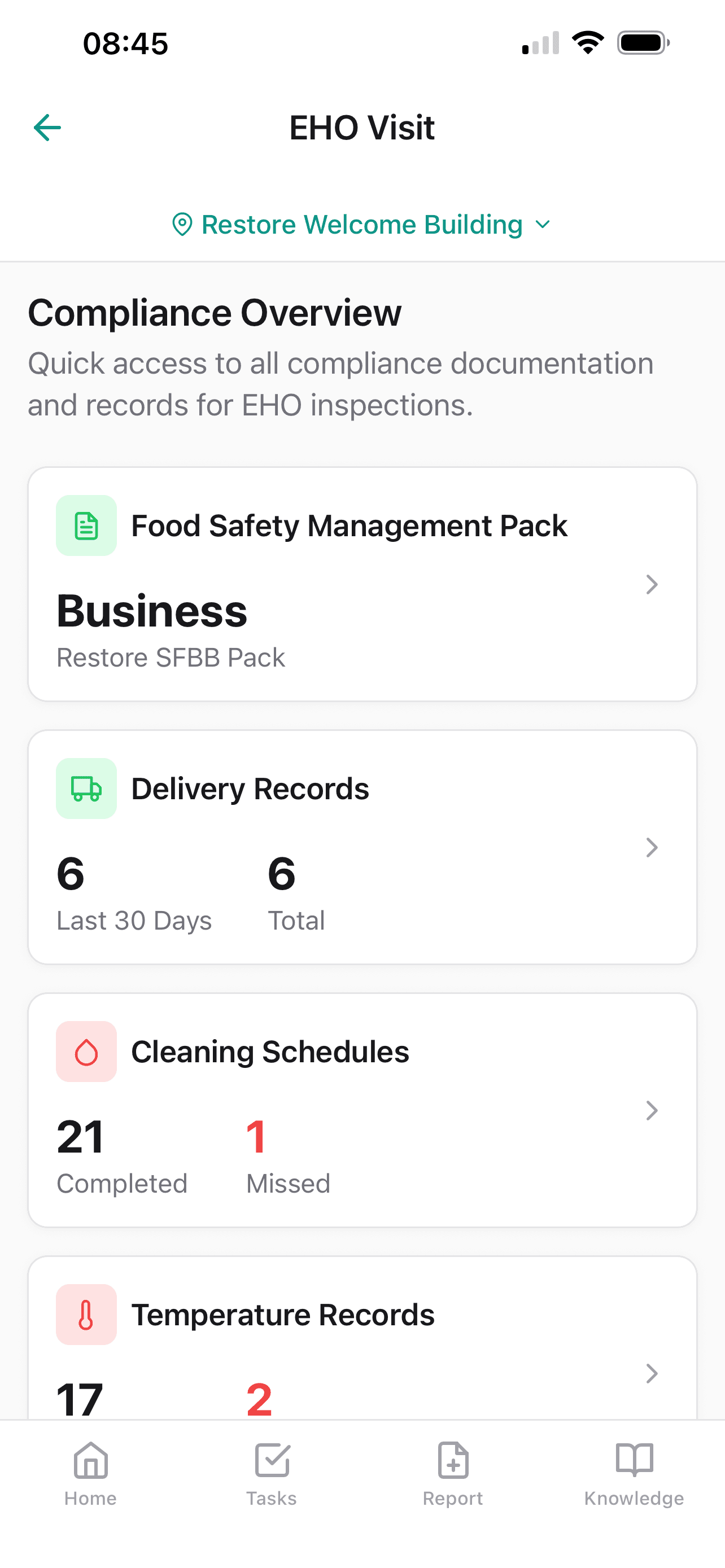
The EHO visit dashboard collects the records an officer actually asks for and puts them behind one screen. There is no hunting through folders while somebody waits, and no need to know where a particular document was filed.
Compliance dashboardHACCP documentation held in the system
The HACCP plan lives in Paddl rather than in a binder, so it is current by default and can be shown on screen rather than retrieved from a cupboard.
HACCPThe SFBB pack kept alongside it
The Safer Food Better Business pack sits in the same place as everything else, with its daily diary entries recorded as they happen rather than filled in retrospectively.
SFBBTraining records attached to the people who hold them
Each team member carries their own training record, so proving that the person standing in front of the officer is trained takes seconds and does not depend on a manager remembering.
Team and trainingRisk assessments kept live
Risk assessments are stored and reviewed in the system rather than written once at opening and left to date.
Risk assessmentsTemperature records captured on the floor
Checks are prompted and logged on a phone or tablet at the point they are done, which is what turns a temperature log into evidence rather than a form somebody backfills.
Routines and checks
A part-time barista, working alone, passed the inspection
When the Environmental Health Officer arrived at the Welcome Building site, the person on shift was a part-time member of staff working alone. That is the scenario most operators quietly dread. It went fine.
Everything requested was produced on the spot
The staff member opened the Paddl EHO visit dashboard and produced what was asked for as it was asked for. Training records, risk assessments and temperature logs were all available immediately.
No manager had to be called in
Nobody had to phone a manager, drive over, or ask the officer to come back another day. The records did not depend on one person knowing where things were kept.
The counter kept serving
The team continued serving customers throughout the visit, fielding the odd ad-hoc question from the officer as they worked.
The officer was visibly impressed
Both with how the records were organised and with the experience of retrieving them digitally in real time.
5 stars at the first attempt
Restore achieved a 5-star food hygiene rating on its very first inspection at a brand-new site, meeting its non-negotiable food safety and hygiene KPI for the location from day one.
The EHO officer was very impressed with the organisation and the digital user experience. This helped us meet our non-negotiable food safety and hygiene KPI for the location.
This is worth reading twice if
- You are opening a new site and registering as a new food business with no inspection history behind you
- Your manager is not on site every hour that an inspector could walk in
- Compliance records are spread across folders, spreadsheets and different systems per location
- Your food hygiene rating is a KPI you are measured on, not just a certificate on the wall
- You run more than one location and need the same standard at each of them
Questions people ask about this
Does Paddl guarantee a 5-star food hygiene rating?
No. The rating is the inspecting officer’s judgement and it covers hygiene, structure and confidence in management. What Paddl changes is the evidence side: your records are current, timestamped and available the moment they are asked for, which is the part most operators lose marks on.
Can a brand-new food business use Paddl before its first inspection?
Yes, and that is when it is most useful. A new registration has no inspection history, so the first visit carries more weight. Restore set the Welcome Building site up in Paddl before opening and was inspected as a new operator with no track record.
What did the EHO actually ask to see?
HACCP documentation, the Safer Food Better Business pack, staff training records, risk assessments and temperature records. All of it was held in Paddl and produced from the EHO visit dashboard during the visit.
Can staff produce records without a manager present?
Yes. At Restore a part-time member of staff working alone handled the whole visit. Access is set by role, so the people on shift can reach the records an officer asks for without waiting for a manager to arrive.
Does this work across more than one site?
Yes. Restore is a multi-site operator, and the reason it moved off scattered paperwork was that keeping records current across locations is harder than producing them once. Each site has its own records, and you can see the state of all of them without visiting.