Hospitality Staff Training: Building a Culture of Excellence
Discover how strategic hospitality staff training reduces turnover, boosts revenue, and builds a lasting culture of excellence - with practical how-to guidance for UK managers.
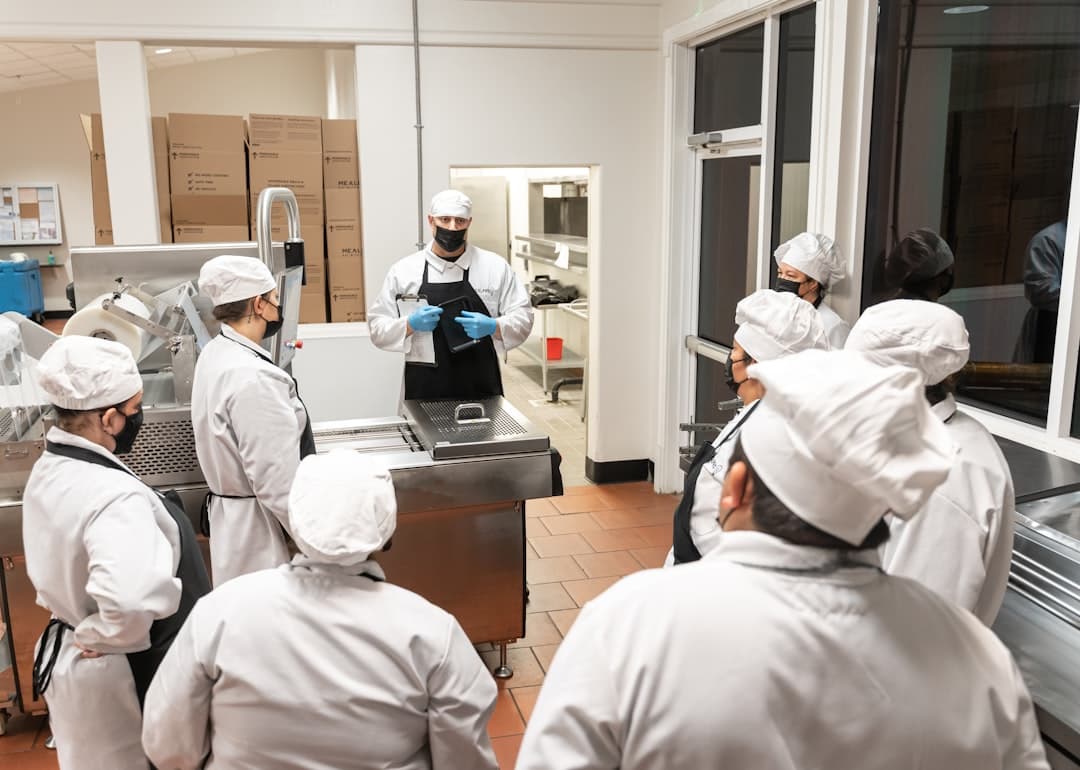 Photo: Photo by MealPro on Unsplash
Staff training in hospitality is often treated as a box-ticking exercise - a compliance requirement to get new starters through the door before the Friday night rush. That mindset is costly. The UK hospitality sector loses billions each year to high turnover, inconsistent service, and avoidable incidents, and underinvestment in training sits at the root of most of it.
This guide takes a different approach. Rather than listing training topics in isolation, it shows you how to build a structured, role-specific, and genuinely impactful hospitality staff training programme - one that reduces churn, strengthens your culture, and delivers measurable returns to your bottom line.
What Training Do You Need to Work in Hospitality?
Before building your programme, it helps to understand the baseline. In the UK, certain training is legally required for hospitality roles, while additional training is strongly recommended by regulators and industry bodies.
Legally required or strongly mandated training for most hospitality employees includes:
Food hygiene and safety - staff handling food must receive appropriate food hygiene training under the Food Safety Act 1990 and Regulation (EC) No 852/2004. Level 2 Food Hygiene is the standard for most front and back-of-house staff.
Allergen awareness - required under EU FIC Regulation (retained in UK law), with named allergen information mandatory for all food businesses. All food-handling staff must understand the 14 major allergens.
Fire safety awareness - the Regulatory Reform (Fire Safety) Order 2005 requires all staff to receive basic fire awareness training, covering evacuation procedures, equipment location, and prevention.
Manual handling - the Manual Handling Operations Regulations 1992 require employers to train staff who carry out lifting or moving tasks, particularly kitchen porters, delivery staff, and housekeeping.
COSHH awareness - staff using cleaning chemicals must be trained under the Control of Substances Hazardous to Health Regulations 2002.
Licensing compliance - staff serving alcohol must understand the Licensing Act 2003 and your premises licence conditions, including Challenge 25, responsible service, and refusal procedures.
Beyond legal compliance, high-performing venues invest in customer service excellence, conflict resolution, upselling, and role-specific technical skills. These are the programmes that separate good venues from great ones.
The 5 C's and 5 P's of Hospitality - and Why They Shape Your Training
Two frameworks regularly used in hospitality management give useful structure to any training strategy.
The 5 C's of hospitality are: Cleanliness, Consistency, Communication, Courtesy, and Competence. Each one maps directly to a training need. Cleanliness requires hygiene and housekeeping training. Consistency demands standardised procedures and regular refreshers. Communication covers both customer-facing skills and internal team coordination. Courtesy is developed through service excellence and soft-skills coaching. Competence is built through role-specific technical training and ongoing assessment.
The 5 P's of hospitality - People, Product, Place, Price, and Promotion - remind us that your people are listed first for a reason. No pricing strategy or marketing campaign can compensate for undertrained staff who deliver a poor guest experience. When you invest in hospitality workforce development, you are strengthening the foundation every other part of your business sits on.
How to Train Hospitality Staff: A Step-by-Step Framework
Effective hospitality staff training does not happen by accident. It follows a deliberate process. Here is a practical framework you can implement regardless of venue size.
Step 1 - Identify Skills Gaps
Start with an honest audit. Review customer feedback scores, incident reports, mystery diner results, and staff exit interviews. Survey your current team using a simple skills matrix that maps each role against required competencies. This tells you exactly where to focus investment rather than delivering the same generic training to everyone.
Step 2 - Define Training Levels by Role and Experience
Structure your programme from beginner to advanced. New starters need induction training that covers compliance basics, venue-specific procedures, and introductory service skills. Intermediate staff benefit from role-deepening modules - upselling techniques, menu knowledge, or team leadership fundamentals. Senior and supervisory staff should access advanced programmes covering performance management, conflict resolution, and operational decision-making.
Step 3 - Choose Your Delivery Methods
Delivery method matters as much as content. Consider the cost-benefit profile of each approach:
On-the-job coaching - low cost, high relevance, but dependent on the quality of the coach. Ideal for technical skills like knife handling, cocktail preparation, or room dressing.
E-learning platforms - scalable, consistent, and easy to track. Well suited to compliance modules (food hygiene, fire safety, COSHH) where completion records are needed for audit purposes.
Classroom or group workshops - effective for soft skills, customer service, and conflict resolution where role-play and discussion add value.
Apprenticeships and accredited programmes - higher upfront investment but deliver formal qualifications, improved retention, and access to government funding through the Apprenticeship Levy.
Micro-learning via mobile apps - increasingly popular for busy hospitality teams who cannot commit to long sessions. Short video modules, quizzes, and checklists delivered via smartphone work well for refresher training.
Step 4 - Set a Training Timeline and Stick to It
Map your training calendar against operational peaks and troughs. New starter inductions should be completed within the first week. Compliance refreshers (food hygiene, fire safety) should be scheduled annually at minimum. Role-development training works well in quieter trading periods - January and early September are natural windows for many UK venues.
Step 5 - Assess, Certify, and Record
Training without assessment is just attendance. Every programme should end with a defined outcome - a test score, a practical observation, a manager sign-off, or a formal certificate. Keep training records in a central, easily retrievable system. During a Food Standards Agency inspection or HSE visit, being able to demonstrate staff training records is a significant compliance advantage.
Training for Specific Roles: What Each Team Member Needs
Generic training is rarely as effective as role-specific programmes. Here is what tailored hospitality workforce development looks like across key positions.
Chefs and Kitchen Staff
Level 2 and Level 3 Food Hygiene certification
HACCP principles and temperature monitoring procedures
Knife skills and equipment safety
Calorie labelling requirements (mandatory for businesses with 250+ employees)
Menu development and cost control awareness
Bartenders and Bar Staff
Personal Licence knowledge and responsible service of alcohol
Challenge 25 procedures and age verification
Cocktail preparation and product knowledge
Upselling techniques and revenue-per-head optimisation
Conflict resolution and managing intoxicated customers
Front-of-House and Hosts
Customer service excellence and complaint handling
Allergen communication and menu knowledge
Upselling and suggestive selling techniques
Reservation systems and POS technology
Accessibility awareness and inclusive service
Housekeeping and Accommodation Staff
COSHH compliance and safe chemical handling
Manual handling techniques and injury prevention
Room presentation standards and quality checklists
Guest interaction protocols and privacy awareness
Security procedures and lost property handling
Apprenticeships and Formal Qualifications
The UK apprenticeship system offers a significant and often underused resource for hospitality businesses. Hospitality apprenticeship standards cover roles including Commis Chef, Hospitality Team Member, Senior Production Chef, and Hospitality Supervisor - all developed with industry input and fundable through the Apprenticeship Levy or government co-investment for smaller employers.
Apprenticeships are not just for young starters. Existing staff can complete apprenticeships as a structured career development pathway, which is one of the most effective staff retention training strategies available. Research consistently shows that employees who receive formal development opportunities are significantly less likely to leave within 12 months.
Beyond apprenticeships, relevant qualifications for hospitality staff include WSET wine and spirits awards, BIIAB licensing qualifications, City and Guilds professional cookery awards, and Institute of Hospitality membership programmes for managers.
Digital and Technology Skills: The Training Gap Most Venues Miss
Technology is reshaping hospitality faster than most training programmes are keeping up. Staff now need confidence with POS systems, reservation platforms, digital ordering tools, and increasingly, AI-assisted guest communication. Yet most employee training strategies make no mention of digital skills whatsoever.
Include technology onboarding as a standard part of induction. When new systems are introduced, build a structured adoption plan rather than leaving staff to figure things out during service. Consider nominating internal tech champions - team members who receive deeper training and support their colleagues informally. This peer-learning approach is low cost and highly effective.
Data literacy is also becoming relevant for supervisory and management roles. Understanding covers like revenue per available room (RevPAR), average spend per head, and table turn rates helps your managers make better operational decisions - but only if they have been trained to interpret the numbers.
Mental Health, Wellbeing, and Inclusion: Non-Negotiable Parts of Modern Training
The hospitality sector has one of the highest rates of work-related stress, anxiety, and burnout of any industry in the UK. Long hours, high-pressure environments, and often unpredictable income create unique wellbeing challenges that generic HR training does not address.
A credible hospitality culture building strategy must include mental health awareness training for managers. Programmes accredited by Mind, Mental Health First Aid England, or Hospitality Action equip supervisors to spot early warning signs, have supportive conversations, and signpost staff to help. Hospitality Action in particular offers sector-specific resources and an employee assistance programme tailored to the industry.
Equality, diversity, and inclusion training is equally important - and increasingly expected by both staff and guests. With the UK's hospitality workforce being one of the most culturally diverse of any sector, training that builds mutual respect, cultural awareness, and inclusive communication creates stronger teams and reduces conflict. Under the Equality Act 2010, employers also have a legal obligation to prevent harassment and discrimination, which makes this training a compliance matter as well as a culture one.
The ROI of Hospitality Staff Training: Making the Business Case
Training investment must be justified to budget holders. The good news is that the returns are well documented. Consider these benchmarks when building your business case:
Staff turnover cost - replacing a single hospitality employee costs an estimated £1,000 to £5,000 when recruitment, onboarding, and lost productivity are factored in. Effective staff retention training that reduces annual turnover by even 10% delivers significant savings.
Upselling uplift - trained front-of-house staff who confidently suggest starters, desserts, or premium beverages can increase average spend per head by 10-20%. On a 50-cover restaurant with two sittings, this adds up quickly.
Compliance avoidance - a single food hygiene prosecution can result in fines of tens of thousands of pounds, reputational damage, and potential closure. The cost of food safety training is fractional by comparison.
Review scores and repeat business - venues with consistently trained teams tend to outperform competitors on review platforms. A one-star improvement in a TripAdvisor or Google rating can increase revenue by 5-9% according to multiple hospitality studies.
Sick leave reduction - workplaces with active wellbeing training programmes report lower rates of stress-related absence. Given that hospitality already runs lean on staffing, even small reductions in unplanned absence have an outsized operational impact.
Track these metrics before and after each training initiative. Over time, you build an evidence base that makes future training investment an easy decision rather than a reluctant cost.
Recruitment, Retention, and Training: How They Connect
Training does not begin on someone's first day - it starts in how you recruit. Job adverts and interviews that emphasise development opportunities, career progression, and learning culture attract candidates who are motivated to grow. This self-selection effect means your training investment goes further because the people receiving it are more engaged from the start.
Once staff are in post, a structured 90-day onboarding programme - not just a one-day induction - dramatically improves retention. Week one covers compliance and venue basics. Weeks two to four involve shadowing, skills practice, and regular check-ins. Months two and three introduce role-specific development and the first performance conversation. Staff who experience this kind of structured welcome are far more likely to still be with you at the 12-month mark.
Ongoing training should be visible and celebrated. Internal notice boards, team briefings, and social channels that highlight staff achievements - a team member completing a WSET qualification, a chef earning a Level 3 certificate - signal to the whole team that development matters here. That signal is one of the most powerful retention tools available.
Building a Culture of Excellence: The Long Game
Individual training sessions do not build culture on their own. Culture is built through the accumulation of consistent expectations, visible leadership behaviours, and ongoing accountability. Your hospitality culture building efforts need to outlast any single training programme.
Practical steps that embed training into daily culture include:
Pre-shift briefings that reinforce service standards and share guest feedback - keeps training principles live rather than confined to a classroom.
Managers who coach in the moment - addressing a service lapse on the floor with a brief, constructive conversation is more powerful than saving feedback for a quarterly review.
A clear training calendar shared with all staff - transparency about what is coming builds anticipation and removes the sense that training is something that happens to people rather than for them.
Recognition linked to training completion - whether through pay progression, additional responsibilities, or simple public acknowledgement, tying rewards to development keeps motivation high.
Senior leaders who participate in training - when a head chef joins a customer service session or a GM completes a mental health first aid course, it communicates that learning is for everyone.
Start Building Your Training Programme Today
The most common reason hospitality businesses under-invest in training is not a lack of willingness - it is a lack of structure. Without a clear framework, training stays reactive: a compliance module here, a one-off workshop there, with no thread connecting them to business outcomes.
Use the steps in this guide to audit where you are today, identify your highest-priority gaps, and build a 12-month training calendar that maps each programme to a measurable outcome. Start with compliance to protect your licence and your rating. Layer in role-specific technical skills to improve quality and consistency. Add service excellence, digital skills, and wellbeing training to drive retention and revenue.
Hospitality staff training done well is not a cost. It is the most reliable investment your business can make in sustainable performance - and it starts with the decision to treat it as such.