Understanding Restaurant Management Software in UK Restaurants and Hotels
From POS systems to payroll, discover how restaurant management software cuts costs, saves time, and keeps UK venues compliant - and how to choose the right one.
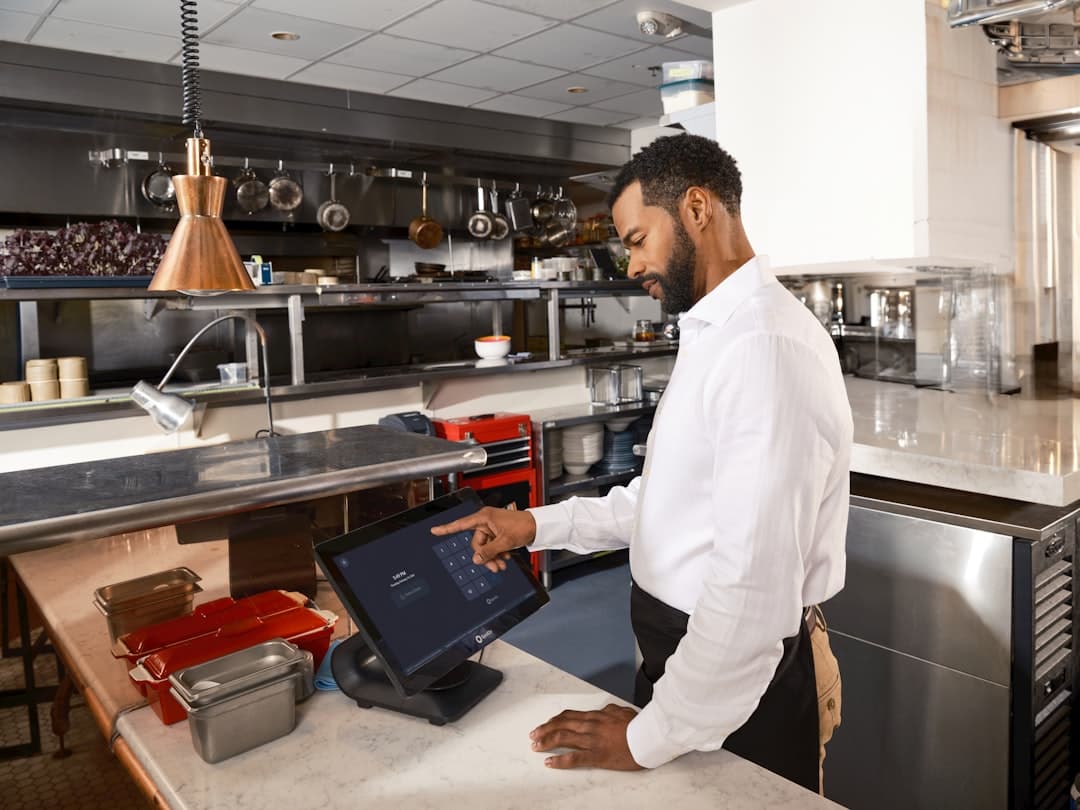 Photo: Photo by SpotOn on Unsplash
What is restaurant management software?
Restaurant management software is an umbrella term for digital tools that help hospitality businesses run more efficiently. It typically covers everything from taking orders and processing payments to managing rotas, tracking food costs, handling reservations, and keeping on top of compliance records.
For UK restaurant and hotel operators, the right software can be the difference between a profitable venue and one that is constantly fire-fighting - juggling paper rotas, manual stock counts, and end-of-month wage headaches. The best platforms bring all of these functions together under one roof, giving managers and owners real-time visibility across their business.
10 ways restaurant management software improves your operation
Google surfaces listicle-style content for this topic because operators want practical, scannable answers. Here are the ten areas where restaurant management software delivers the biggest return.
1. Cost reduction and efficiency gains
Rising food prices, energy bills, and wage costs are squeezing UK hospitality margins harder than ever. Restaurant management software tackles this directly by giving you accurate, real-time data on where your money is going.
Automated purchasing alerts prevent over-ordering and reduce spoilage.
Recipe costing tools calculate the exact gross profit margin on every dish.
Energy and supplier cost dashboards highlight where savings are possible.
Many operators report a 2-4% improvement in food cost percentage within the first three months of switching to a dedicated platform.
2. POS system functionality
A modern point-of-sale (POS) system is the engine at the heart of any restaurant management software stack. Today's POS platforms go far beyond processing card payments.
Split bills, service charge handling, and GDPR-compliant receipt options.
Real-time sales reporting broken down by cover, time of day, and menu category.
Integration with kitchen display systems (KDS) to speed up ticket times.
Automatic syncing with stock management so inventory updates with every sale.
Popular UK-compatible POS options include Lightspeed, Tevalis, and Epos Now, all of which offer cloud-based dashboards accessible from any device.
3. Labour cost savings
Labour is typically the largest controllable cost in a UK restaurant, often sitting between 25% and 35% of turnover. Restaurant management software helps you manage this with precision.
Demand-led scheduling tools analyse historical sales data to predict the right number of covers and staff accordingly.
Live wage cost trackers alert managers when they are approaching budget before it is too late to act.
Overtime flagging ensures compliance with Working Time Regulations 1998.
Operators typically save 3-5% on their total labour bill in the first year by switching from manual scheduling to software-driven rota management.
4. Food waste management
WRAP estimates that UK hospitality businesses waste approximately 1.1 million tonnes of food each year. Restaurant management software tackles waste at every stage of the supply chain.
Automated stock rotation alerts based on use-by dates and FIFO principles.
Waste logging tools that identify your highest-waste items and shift patterns.
Integration with supplier ordering to match purchases to actual sales forecasts.
Under the Simpler Recycling rules that took effect in England in 2025, food businesses must separate food waste for collection - software can help you track and report volumes accurately.
5. Scheduling and team management
Rota management is one of the most time-consuming tasks for any hospitality manager. The right software turns hours of spreadsheet work into minutes.
Drag-and-drop rota builders with automatic conflict detection.
Shift swap and availability request portals that empower staff without creating manager chaos.
Automated rota publication via app notifications, reducing no-shows.
Absence and holiday tracking that stays aligned with UK statutory entitlements under the Employment Rights Act 1996.
6. Admin time reduction
Admin is the silent killer of manager morale in hospitality. Studies consistently show that managers in restaurant environments spend 15-20% of their working week on tasks that software can automate.
Automated end-of-day reports delivered to your inbox each morning.
Digital temperature logs and food safety checklists that satisfy Environmental Health Officer (EHO) requirements without clipboards.
Supplier invoice reconciliation tools that match deliveries to purchase orders automatically.
Compliance document storage with audit trails - essential for Food Safety Act 1990 record-keeping obligations.
7. Table management and reservations
Every empty seat is lost revenue. Table management tools within restaurant management software help you squeeze more covers out of every service.
Interactive floor plan views showing table status in real time.
Integration with reservation platforms such as OpenTable, ResDiary, or Sevenrooms.
Automated deposit and pre-order management to reduce no-shows.
Waitlist and walk-in management tools that maximise covers on busy nights.
Guest preference and allergy profiles that pull through automatically at booking - supporting your allergen management obligations under UK food law.
8. Kitchen operations
A well-run kitchen is a profitable kitchen. Restaurant management software connects your front-of-house and back-of-house teams in ways that reduce errors and speed up service.
Kitchen display systems (KDS) replace printed tickets, reducing errors and speeding up ticket times.
Recipe management tools ensure consistency and make HACCP-aligned portion control straightforward.
Prep lists generated automatically from bookings and forecast sales volumes.
Digital temperature and cleaning records that satisfy EHO inspection requirements without paper logbooks.
9. Payroll and tip management
The Employment (Allocation of Tips) Act 2023 - which came into full force in October 2024 - changed the game for tip management in UK hospitality. Every employer must now have a written tips policy and distribute tips fairly and transparently.
Integrated tip allocation tools that automatically distribute gratuities in line with your policy.
Payroll software that correctly applies National Minimum Wage rates, including the April 2025 uplifts.
Automatic PAYE and National Insurance calculations to reduce the risk of HMRC compliance issues.
Digital payslip delivery that meets the right to a written pay statement under the Employment Rights Act 1996.
10. Sales acceleration
Beyond cutting costs, the best restaurant management software actively drives revenue growth.
Upsell prompts on handheld ordering devices that increase average spend per cover.
Loyalty programme integration to encourage repeat visits and track customer lifetime value.
Sales performance dashboards that identify your best-selling and most profitable dishes.
Marketing integrations with email and SMS platforms to fill quieter midweek covers.
Online ordering and click-and-collect functionality for additional revenue streams beyond the dining room.
UK-specific considerations: compliance, data protection, and integrations
Many restaurant management software reviews focus on the US market. UK operators need to check for some important domestic requirements before committing to a platform.
GDPR and UK Data Protection Act 2018 compliance - any software storing customer or employee data must meet these standards. Check where data is hosted and whether it remains within the UK or EEA.
Calorie labelling support - venues with 250 or more employees must display calorie information on menus under regulations introduced in April 2022.
Allergen management - software should support the 14 major allergen declarations required under UK food law, ideally linking to your menu management system.
Making Tax Digital - choose software that integrates with HMRC-compatible accountancy platforms such as Xero or QuickBooks.
Offline functionality - UK venues in areas with poor connectivity, particularly rural pubs and hotels, need software that can operate without a live internet connection and sync when reconnected.
How to choose the right software for your venue type
Not all restaurant management software is built the same. Here is a quick guide by venue type.
Venue type | Key priorities | What to look for |
|---|---|---|
Fine dining | Guest experience, reservation management, wine list integration | CRM depth, tasting menu functionality, sommelier tools |
Casual dining | Speed, table turnover, staff scheduling | Robust POS, easy rota tools, loyalty integration |
Quick service (QSR) | Transaction speed, queue management, online ordering | Kiosk support, delivery platform integration, KDS |
Pub / bar | Drinks-led POS, cellar management, licensing compliance | Beer line management, Premises Licence support, age verification prompts |
Hotel restaurant | PMS integration, room charge posting, breakfast service management | Two-way integration with Opera, Mews, or similar PMS |
Implementation and onboarding: getting your team on board
Even the best restaurant management software will fail if your team does not adopt it. A structured implementation plan is essential.
Audit your current processes - understand what you are replacing before you replace it.
Involve your team early - managers and senior staff should be consulted during the selection process, not just handed a new system on go-live day.
Run parallel systems for two to four weeks - operate old and new systems simultaneously to catch gaps before you switch off the legacy process.
Designate internal champions - identify one enthusiastic team member per department to lead peer-to-peer training.
Set measurable targets - agree specific KPIs (food cost %, labour %, ticket times) before and after implementation so you can demonstrate ROI clearly.
Plan for a quiet period - avoid launching new systems in peak trading weeks such as the Christmas party season or summer bank holidays.
Most reputable software providers offer free onboarding support, dedicated account managers, and UK-based customer service. Prioritise vendors with proven experience in the UK hospitality sector and check independent reviews on platforms like Capterra and G2 before committing.
Calculating your ROI before you commit
Before signing any contract, run a simple ROI estimate. Take your current monthly spend in three areas - labour, food cost, and admin time - and apply realistic improvement percentages based on vendor case studies. A restaurant turning over £600,000 per year that saves just 2% on food cost and 3% on labour will recover the cost of most mid-tier software platforms within three to four months.
Ask vendors for UK-specific case studies from venues similar in size and type to yours. Reputable providers will be able to share real data from comparable businesses rather than generic claims.
Frequently asked questions
What software do restaurants use for management?
UK restaurants use a range of software depending on their size and needs. Popular options include Lightspeed, Tevalis, Epos Now, and TouchBistro for POS and operations management, combined with specialist tools for scheduling (Rotaready, Fourth), reservations (ResDiary, OpenTable), and stock management (MarketMan, Unleashed). Many operators choose an all-in-one platform to reduce the number of integrations required.
Which is the best restaurant software?
There is no single best restaurant management software - the right choice depends on your venue type, size, and budget. For UK operators, key factors include GDPR compliance, offline functionality, UK payroll support, and integration with HMRC-compatible accountancy tools. Lightspeed and Tevalis are consistently well-reviewed for larger operations, while Epos Now and Square are popular with smaller independent venues.
Is there a free app for restaurant inventory management?
Yes, several platforms offer free tiers for basic inventory management. Square for Restaurants includes basic stock tracking in its free plan. MarketMan and Unleashed offer free trials. However, free plans typically limit the number of locations, users, or products you can track. For a growing UK hospitality business, a paid platform with full integration to your POS and supplier ordering systems will almost always deliver stronger ROI.
What software does McDonald's use?
McDonald's operates proprietary enterprise-level systems developed in-house and through partnerships with technology providers. At the point of sale, they use custom-built kiosk and POS platforms integrated with kitchen display systems. Their supply chain and inventory management runs on bespoke enterprise software. These systems are not commercially available, which is why independent and growing restaurant groups typically look to platforms like Lightspeed, Tevalis, or Fourth for comparable functionality at scale.